

Every New Yorker has experienced it: the less than picturesque world of scaffolding.
Maybe it’s appeared outside your apartment, blocking the sunlight from your windows. Maybe it’s taken over your favorite coffee shop corner, narrowed your daily commute, or transformed an otherwise beautiful block into a dimly lit tunnel.
For decades, sidewalk sheds have been one of those quintessentially New York inconveniences. They’re necessary for safety, but hardly something anyone has ever described as attractive. In fact, with thousands of them scattered across the five boroughs at any given time, they’ve become as much a part of the city’s streetscape as yellow taxis and subway grates.
Our favorite city always finds a way, even (or especially) when it comes to its aesthetic choices. Now, NYC is finally giving these infamous structures a long-overdue makeover.
Make way for NYC’s new sidewalk sheds
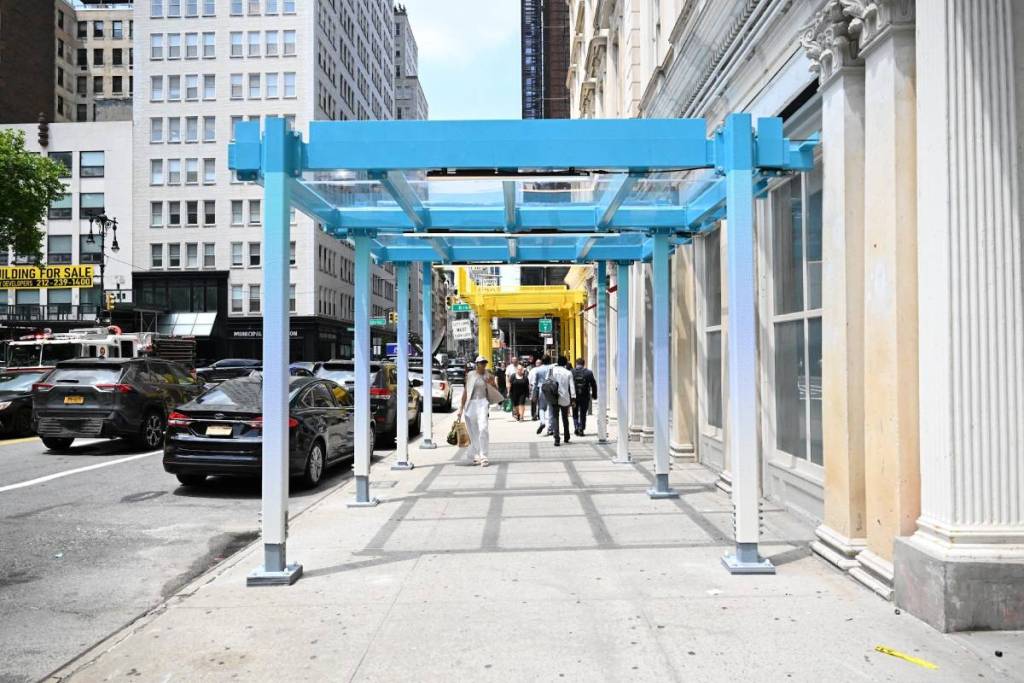
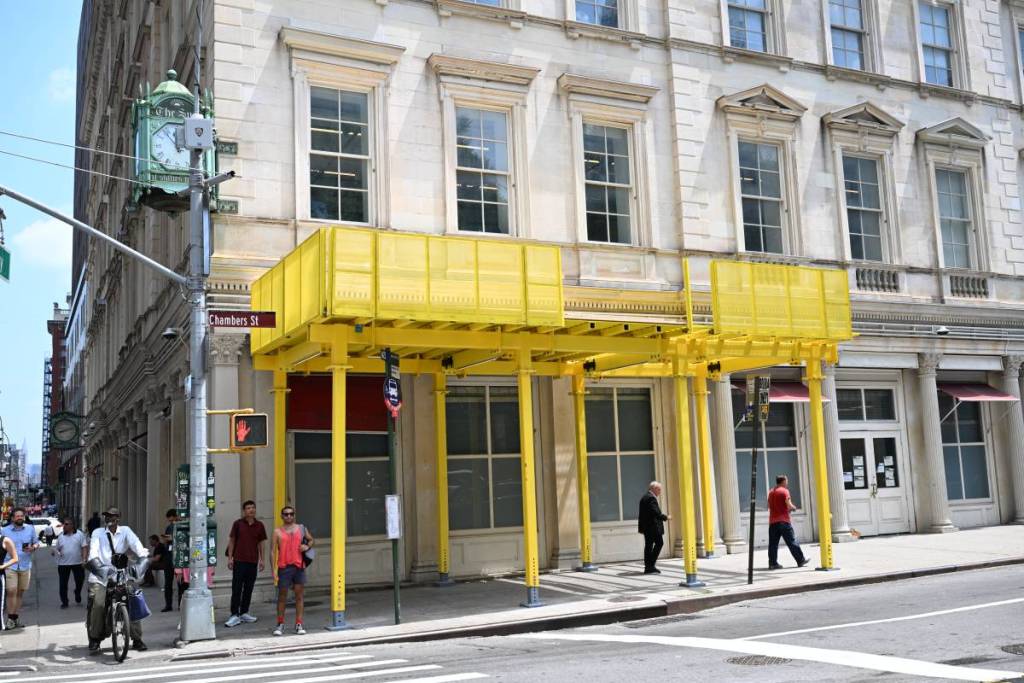
New York City has unveiled the first full-scale prototypes of six redesigned sidewalk sheds that promise to make walking beneath scaffolding feel brighter, more open, and far less claustrophobic.
The new designs aim to preserve the same critical pedestrian protections while replacing the dark, hunter-green pipe-and-plywood structures New Yorkers have grown accustomed to with sleeker, more modern alternatives that let in natural light and create significantly more room on the sidewalk.
The first two prototypes (the Flex Shed and the Rigid Shed) are now on display outside the NYC Department of Buildings headquarters in Lower Manhattan, where New Yorkers can see them in person for a limited time.
The Flex Shed vs the Rigid Shed
The Flex Shed is intended for building maintenance and emergency repairs. Its adjustable roof height and movable columns allow it to work around bus stops, street signs, and other sidewalk obstacles, while optional transparent roof panels flood the walkway below with natural light.
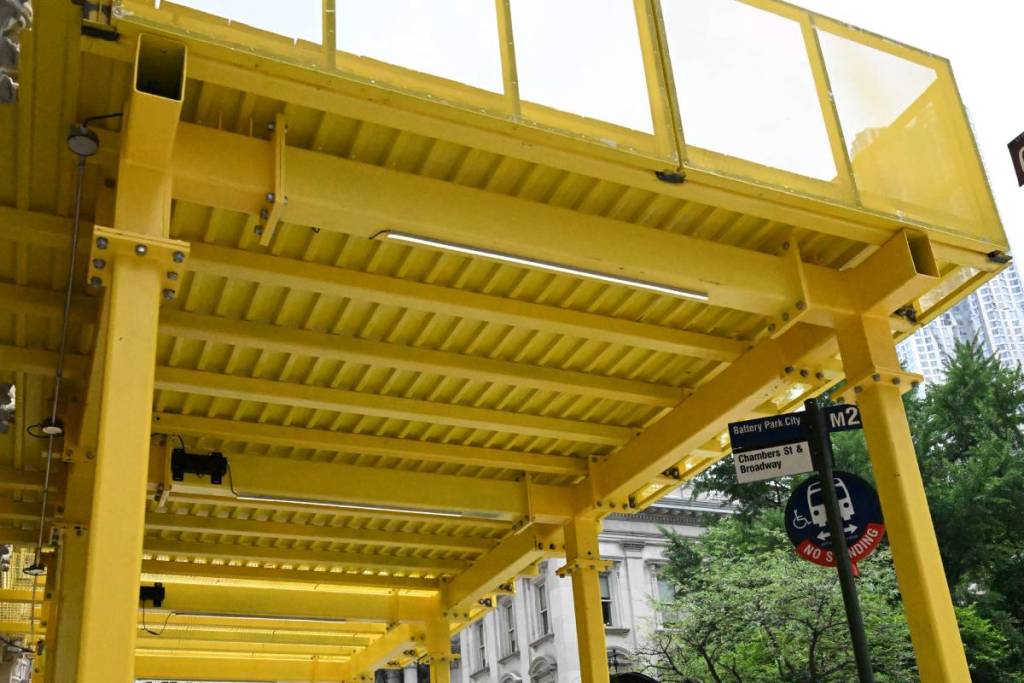
Meanwhile, the Rigid Shed is designed for larger construction projects and building renovations.
Thanks to a new structural system that eliminates the familiar cross–bracing, the design creates wider, more open walkways without compromising safety—making sidewalks feel less like obstacle courses and more like, well, sidewalks.
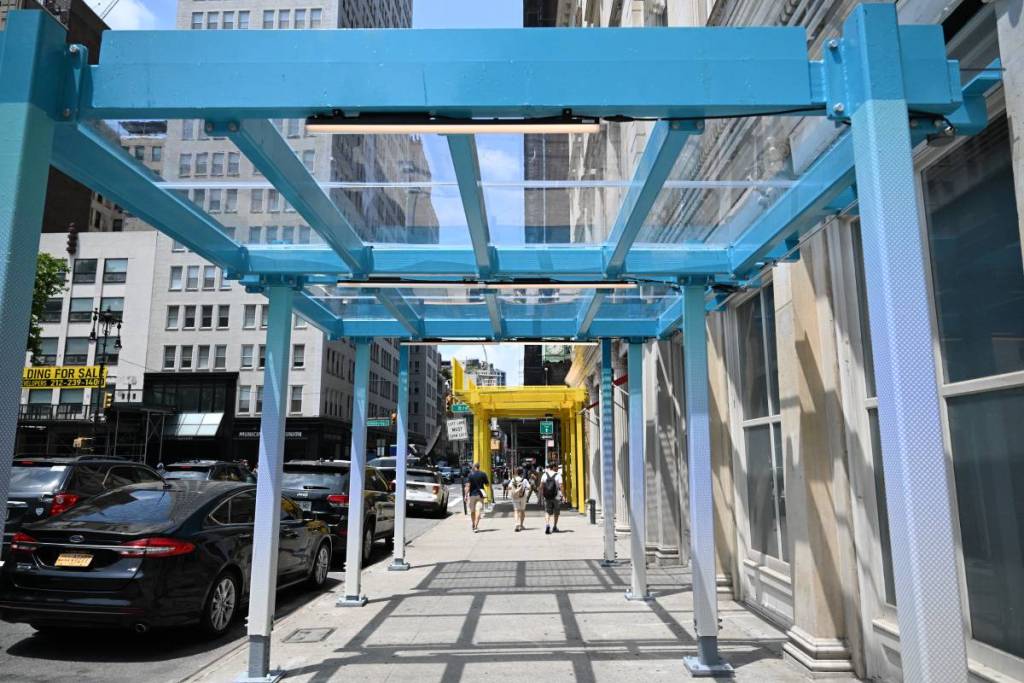
Together, they’re just two of six entirely new sidewalk shed designs the city plans to introduce.
The history of the resdeisgn
The initiative began in 2024, when the Department of Buildings enlisted leading architecture firms Arup and Practice for Architecture and Urbanism (PAU) to rethink one of New York’s most recognizable—and least beloved—pieces of infrastructure. Each team developed three concepts that prioritize visibility, openness, accessibility, and aesthetics while continuing to protect pedestrians from overhead hazards.
According to the city, all six designs will eventually become publicly available through updated Department of Buildings rules expected later this year, allowing property owners and contractors across New York City to choose from a new generation of sidewalk sheds instead of relying solely on the decades-old standard.
Mayor Zohran Mamdani said the goal is simple: protect pedestrians without sacrificing the experience of walking through the city:
New Yorkers are tired of sidewalk sheds that darken our streets and take up precious public space. We’re working to reduce the number of sheds across the city and to make the ones that remain safer and brighter.