


2026 is somehow already on the horizon (truly, how did that happen?!), and with it comes a fresh wave of New Year’s resolutions–many of which involve finally booking that life-changing trip. Because as much as we love New York, she does have a way of stressing us out sometimes, and there’s absolutely nothing wrong with craving a change of scenery (don’t worry, NYC–we’ll come back…probably).
So, to fuel our collective wanderlust, we asked you–our readers–where you’re dreaming of traveling in 2026. The responses spanned the globe: Dublin, Norway, Amsterdam, Austria, Budapest, St. Lucia…even New Jersey (ambitious!). But one destination completely stole the spotlight with the most votes by far: Japan.
According to our poll, many of you are drawn in by Japan’s legendary food scene–which I can attest to is worth the trip alone–but that’s only scratching the surface. I, too, hopped on the Japan bandwagon this past March and, after experiencing it firsthand, can completely understand why it’s sitting at the very top of so many bucket lists…so let’s dive into it!
Grab your neck pillow–we’re going on a long journey.
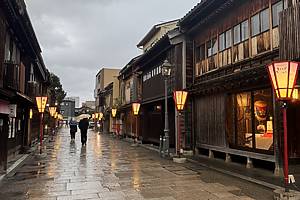
🍱 Japanese Food
So what exactly is pulling New Yorkers–and travelers everywhere–towards Japan right now? From once-in-a-lifetime meals to breathtaking landscapes and a culture that balances ancient tradition with futuristic innovation, the reasons are endless.
Let’s start with the one thing almost everyone agrees on: the food.
🍢 Izakaya
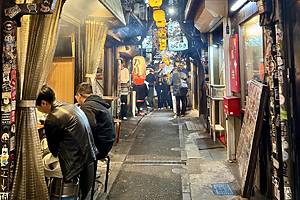
One of my absolute favorite parts of traveling through Japan was izakaya hopping–and once you experience it, it’s easy to see why this tradition is so deeply woven into daily life.
If you’re unfamiliar, izakaya are casual neighborhood drinking spots–think: part tapas bar, part pub–where groups gather to order small plates meant for sharing. They’re one of the most common restaurant types in Japan and a go-to spot for coworkers, friends, and late-night snackers winding down after a long day.
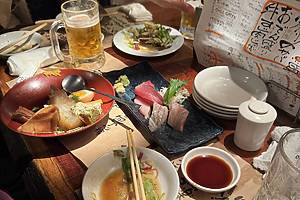
Menus at izakaya are famously wide-ranging, often featuring everything from ultra-fresh sashimi and sizzling yakitori to grilled meats and seafood, crisp salads, pickles, fried comfort foods, regional specialties, rice, and noodles. And for non-Japanese speakers: most spots include photos next to the dishes, making ordering surprisingly easy.
Of course, because izakaya are primarily drinking destinations, you’ll also find an impressive selection of beer, sake, and shochu. Many establishments boast a signature dish as well, which makes an izakaya crawl the new bar crawl.
A typical night out at an izakaya usually runs between ¥2,000 and ¥5,000 per person (roughly $15-$30), though this can be lower at budget chains or higher at upscale establishments.
🐟 Fish Markets
Fish markets in Japan aren’t just places to buy seafood–they’re full-blown sensory experiences. Many feel like sprawling food neighborhoods packed with stalls selling fresh fish, sizzling street food, produce, kitchenware, and local specialties. They’re perfect for eating your way through the city, wandering with friends, or just resting your feet à la people watching.
I personally spent nearly two full hours exploring Tokyo’s Tsukiji Outer Market, and still didn’t see everything. The smells are strong (in a delicious way) and the flavors are even better. It’s one of those places where you’ll eat something unforgettable and immediately want to go back for more.
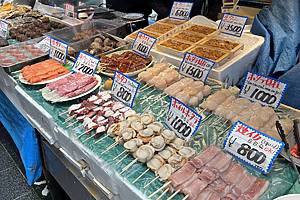
Some of Japan’s most famous and beloved fish markets include:
- Toyosu Fish Market (Tokyo’s wholesale market)
- Tsukiji Outer Market (the public-facing food paradise)
- Omicho Market (Kanazawa)
- Nakaminato Fish Market (Ibaraki)
Whether you’re chasing the freshest sashimi of your life or just want to snack your way through a maze of food stalls, Japan’s fish markets are a must.
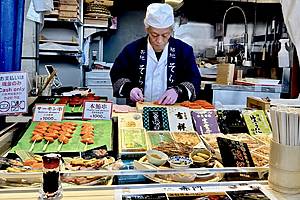
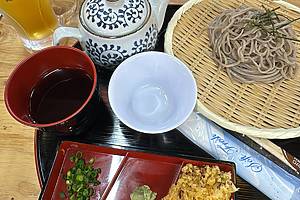
🍜 Ramen, Udon, & Soba
If there’s one thing you’ll quickly realize in Japan, it’s that noodles are essentially a way of life. Udon, ramen, and soba each have their own devoted fan base, regional styles, and flavor profiles.
Ramen is arguably the most well-known to travelers, with its rich broths that simmer for hours, chewy noodles, melt-in-your-mouth pork, and endless regional variations–from Tokyo’s soy-based shoyu ramen to the famously creamy tonkotsu of Fukuoka. And the best part is that some of the most unforgettable bowls cost under $10.
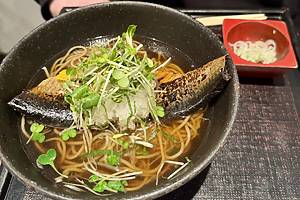
Udon, with thick, chewy wheat noodles, is typically lighter, often served in delicate broth or tossed cold with dipping sauce in the warmer months. If you’re anything like me, you’ll be grabbing a bowl for breakfast, lunch, and dinner (which I practically did from Udon Takuma when I was staying in Osaka 🤤).
Soba, made from buckwheat, offers a slightly nutty flavor and is beloved both hot and cold–especially for quick lunches and late-night meals.
What makes Japan’s noodle culture truly special is how accessible it is. You’ll find hole-in-the-wall counters, Michelin-recognized ramen shops, train-station stalls, and even vending machine ordering systems. No reservations and no fuss, just incredible food, fast.
🍣 Sushi
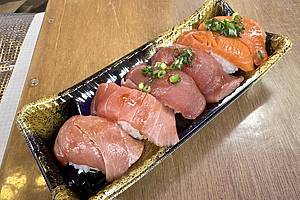
If you were wondering, yes: sushi in Japan really is that good. From luxury omakase counters where chefs serve each piece like a work of art to conveyor belt sushi chains where plates move by for just a few dollars each, sushi in Japan is a no-brainer.
What sets Japanese sushi apart is how meticulous they are with it all: the temperature of the rice, the freshness of the fish, and the timing of every bite. Even the simplest tuna nigiri tastes out of this world.
And because seafood is often sourced locally and served immediately, the flavor difference is undeniable.
Whether you’re splurging on a once-in-a-lifetime omakase experience or grabbing an incredible sushi lunch for under $15, it’s consistently some of the best sushi you’ll ever eat.
🍙 Family Mart, Lawson, & 7-Eleven
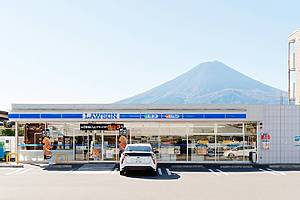
No, this isn’t a joke. Japan’s convenience stores are genuinely one of the best places to eat in the country.
FamilyMart, Lawson, and 7-Eleven aren’t just for snacks and Pocari Sweat runs (pro tip: stock up on these if you’re doing a lot of walking and izakaya hopping! 😉); they’re full-blown food destinations where you can grab fresh, shockingly delicious meals at any hour of the day.
I’m talking fresh onigiri, hot fried chicken, bento boxes, ramen, sandwiches, egg salad, and desserts that easily rival bakery cases. And it’s all fast, affordable, and everywhere.
This becomes a lifesaver when you’re sightseeing, catching trains, or have zero energy for a sit down meal (which will happen). You walk in hungry, walk out happy, and somehow spend less than $10 doing it.
🇯🇵 Sights & Scenery
No matter where you go in Japan, the scenery alone is enough to stop you in your tracks.
One moment you’re standing beneath neon-lit skyscrapers, and the next you’re wandering through silent bamboo forests, misty mountains, and centuries-old shrines.
It’s a country where natural beauty and meticulous design coexist in perfect balance–and it’s one of the biggest reasons travelers keep coming back again and again.
🏯 Temples & Shrines
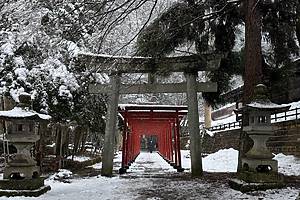
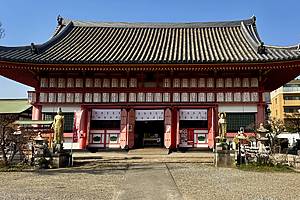
Japan’s temples and shrines truly feel like portals into the past. From the towering red gates of Fushimi Inari in Kyoto to the peaceful paths of Meiji Shrine in Tokyo (Shibuya) to the lion head Namba Yasaka Jinja in Osaka, these sacred spaces offer calm in the middle of even the busiest cities.
What makes them particularly interesting is the contrast–you can be steps away from traffic, crowds, and chaos, and suddenly you’re surrounded by trees, incense smoke, and total stillness.
🏙️ Urban Scenery
If you think NYC comes alive at night, wait until you see Japan.
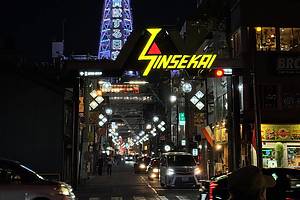
Tokyo alone feels like several different worlds stacked on top of each other–futuristic neighborhoods like Shibuya, Shinjuku, and Shinsekai glow with billboards and LED screens, while quieter areas feel almost village-like.
Nighttime is when the magic really hits, what with the lights, the motion, the sound of trains, and the crowds crossing massive intersections (yes, it’s touristy, but Shibuya Crossing is cool to check out!).
For many travelers, simply walking through Japanese cities becomes an experience in itself.
🗻 Natural Landscapes: Mountains, Forests, & Coastlines
Beyond the cities, Japan’s natural scenery is just as breathtaking.
Snow-capped mountains, hot spring towns tucked into valleys, dramatic coastlines, and forests that seem to stretch forever make it easy to escape into nature–sometimes within just an hour of a major city.
Whether you’re hiking near Mt. Fuji, walking through mossy trails in Kyoto, or soaking in an onsen surrounded by mountains, Japan’s landscapes feel almost unreal in their variety and beauty.
Just make sure if you do head to an onsen you familiarize yourself with its rules first–many, if not all, require you to be fully naked, and some don’t allow tattoos. What I will say is that there was an onsen on the roof of the hotel I stayed at in Kanazawa and it was a life changing way to unwind after a 30K step day–despite having half my body covered with tattoo stickers!
🌸 Seasonal Beauty: Cherry Blossoms, Fall Foliage, & Snowy Streets
Japan’s seasons aren’t subtle–and that’s part of what makes it so special.
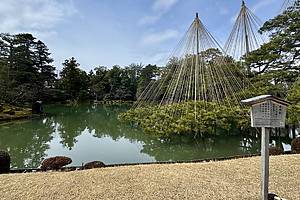
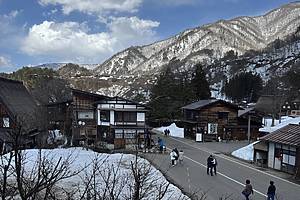
Spring brings iconic cherry blossoms, fall explodes into fiery red and gold foliage, winter blankets certain cities in snow, turning streets, temples, and villages into postcard-perfect scenes, and summer is lush and full of life.
Each season completely changes the look and feel of the country, part of why so many travelers return multiple times.
Pro tip: make sure you bring clothing for all weather: I went from a winter jacket and hats in snowy Shirakawa-go to short sleeves and sunglasses in Osaka just four days later!
👾 Anime, Pop Culture, & Kawaii
Even if you’ve never watched a single episode of anime, Japan’s pop culture presence is impossible to miss.
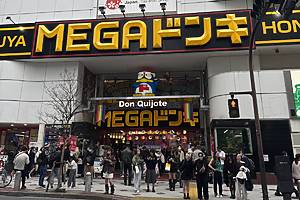
Anime, manga, gaming, and all things kawaii (aka adorable) are woven into daily life–from subway ads and storefronts to cafés, clothing, and entire neighborhoods built around fandom.
Places like Akihabara in Tokyo feel like a living, breathing pop culture playground, packed with figure shops, arcades, retro game stores, capsule toy machines, themed cafés, and people dressed in Harajuku fashion.
But you’ll also stumble upon characters and cute designs in the most unexpected places–on snacks, street signs, trains, and even construction barriers.
What makes Japan’s pop culture scene so special is how seamlessly it blends into everyday life. It’s playful without feeling over-the-top and endlessly charming.
🚅 Transit – Surprisingly Easy to Maneuver, Especially for New Yorkers
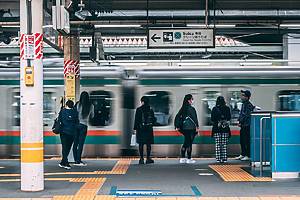
At first glance, Japan’s transit system can look intimidating–the maps are massive, the stations are huge, the trains never seem to stop, and, of course, announcements are made first in Japanese.
But once you’re actually using it, you quickly realize it’s one of the most efficient, intuitive public transportation systems in the world–especially if you’re already used to navigating the NYC subway.
Trains run constantly, arrive on time (to the literal minute), and connect nearly every corner of major cities and beyond.
Stations are clearly labeled in English, fare machines are easy to use, and apps like Google Maps make maneuvering through your journey almost foolproof. If you can survive a rush-hour transfer in NYC, you can absolutely handle Tokyo Station.
🎎 Thinking About Japan for 2026? Here’s the Final Verdict
Japan didn’t just top our readers’ travel poll by chance–it’s on so many people’s bucket lists for a reason.
Between the unforgettable food, seamlessly connected cities, jaw-dropping scenery, playful pop culture, and a transit system that makes exploration effortless, it’s the kind of place that stays with you long after you’ve unpacked your bags…trust me.
If you’re already thinking about planning your own trip, here are a few of my personal can’t-miss recommendations (for reference I visited Tokyo, Kanazawa, Shirakawa-go, Takayama, and Osaka):
🎌 Tokyo Must-Dos
- Shibuya Nonbei Yokocho – a narrow alley, barely six feet wide, with about 40 small izakayas lined up
- Shinjuku Golden Gai – a network of six narrow alleys, which are about wide enough for a single person to pass through, filled with over 200 tiny shanty-style bars, clubs, and eateries
- Tsukiji Outer Market – literally no further explanation is needed besides what I said above…just go (and try a yuzu lager)!
- Sabouru – hidden in Jimbocho, Tokyo’s bookstore district, Sabouru is a traditional kissaten in Tokyo (traditional Japanese cafe) that literally feels like you’re inside a treehouse
- Shirubee Shibuya – an izakaya in Shibuya where you need to duck through a dollhouse-sized door to enter and take your shoes off once inside–just trying to find it in the first place is half the fun!
- Miyano-Yu – the literal cutest, most aesthetically pleasing coffeeshop I’ve ever seen, built inside an old sento bathhouse
- Vineria II Passaggio – if you have the same TikTok algorithm as mine, you probably saw this–it’s a small, quiet wine bar where the owner serves you wine in a seashell, and it is worth the hype
🎌 Kanazawa Favorites
- Mikaduki – the smallest, cutest little bar with a damn good negroni
- Omicho Market – Kanazawa’s largest fresh food market
- Higashi Chaya District – a traditional neighborhood with teahouses where geisha perform, plus shops selling gold leaf crafts
- Chuo Mishokugai – yet another tightly packed collection of small bars and restaurants (by now you’re probably sensing a trend here…)
- Music Bar Donuts – if they find out you’re from NYC expect to immediately hear Biggie, Nas, Wu-Tang, and the likes

🎌 Takayama Tastings
- No specific places here, but sake tastings galore!!!
🎌 Osaka Essentials
- Kuromon Market – another fish market (grab udon at Daikichi!)
- Nakazakicho – a trendy neighborhood filled with cute coffee and thrift shops
- Stand Harajuku – a cool (albeit hard to find) record bar where, once again, you’re likely to hear Wu-Tang and other NYC artists
- Chicken Shack – not a place to get chicken but a cool bar/almost club-like place to hear live music
- Takuma – pleaaasseeee go here for udon!!!
- Shinsekai – a historic neighborhood known for its retro atmosphere, vibrant street life, and iconic Tsutenkaku Tower…it literally feels like you’re at a fair in the best way possible (if you stop at Kushikatsu Benkei for izakaya look out for my boyfriend’s drawing of the NYC pizza rat!)
- Keitakuen Garden – a stunning and peaceful place to get a breather

If Japan has been sitting on the back of your bucket list for years, consider this your sign to finally make it happen. Now all that’s left to do is book your flight! ✈️