


If you live in upper Manhattan, you know exactly what happens when the skies open up.
Heavy rain can overwhelm sewer systems and significantly increase flooding risks in nearby neighborhoods. But relief is officially on the way.
A $35.7 million infrastructure project in northern Central Park aims to help reduce that risk for residents in Harlem and East Harlem while simultaneously saving the city’s drinking water.
Mayor Zohran Mamdani, Gov. Kathy Hochul, and Betsy Smith, president and CEO of the Central Park Conservancy, officially announced the start of construction on the North End Recirculation Project.
This upgrade is explicitly designed to better manage rainwater in northern Central Park.
Reimagining our city’s stormwater management
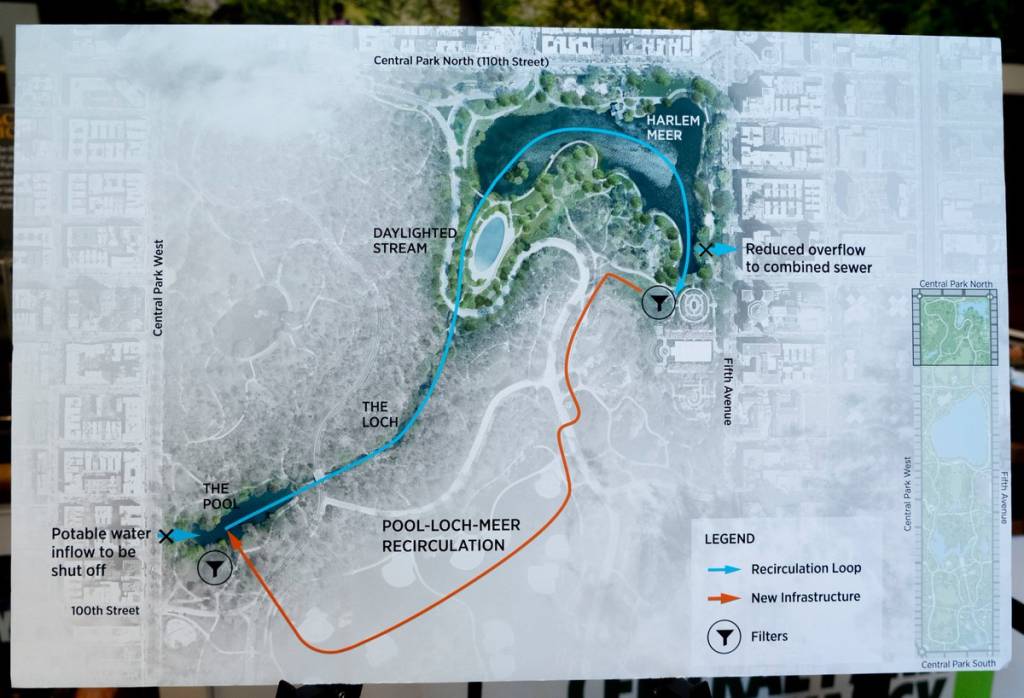
The goal of the project is simple but massive in scale. It will keep a substantial amount of rainwater out of local sewers during heavy storms.
Once completed, the system is expected to keep about 132 million gallons of stormwater out of local sewers each year. It will also save about 175 million gallons of drinking water annually.
“Climate change is bringing more frequent and severe rainfall to our city,” Mayor Mamdani explained. “So far this year, we’ve spent one in three days under a flash flood activation.”
Central Park Conservancy President Betsy Smith echoed the importance of the initiative, noting that the North End Recirculation System is their “most ambitious infrastructure project to date.”
Funding a climate-resilient future

This ambitious $35.7 million project is being funded by a joint effort from the city, state, and private donors. The city is providing more than $19.6 million.
That major investment includes $14.2 million from the Department of Environmental Protection, $2 million from City Council Speaker Julie Menin, $500,000 from Manhattan Borough President Brad Hoylman-Sigal, and $100,000 from Council Member Gale Brewer.
The state is stepping in to contribute a $10 million grant. Additionally, Central Park Conservancy donors raised $3.5 million for the cause.
The project already has widespread community backing. It secured support from all five community boards surrounding Central Park.
The city’s Landmarks Preservation Commission issued an advisory report in support, and the NYC Public Design Commission approved the final design back in December 2024.
“When communities help lead infrastructure planning, we can build projects that protect New Yorkers and the places they call home from extreme weather,” said NYC Chief Climate Officer Louise Yeung.
As climate change continues to impact our daily commutes and routines, these types of infrastructure upgrades are becoming essential.
Locals can expect the project to be fully completed in fall 2028.
Don’t miss out! Follow us on Facebook, Instagram, and now on WhatsApp, too!