
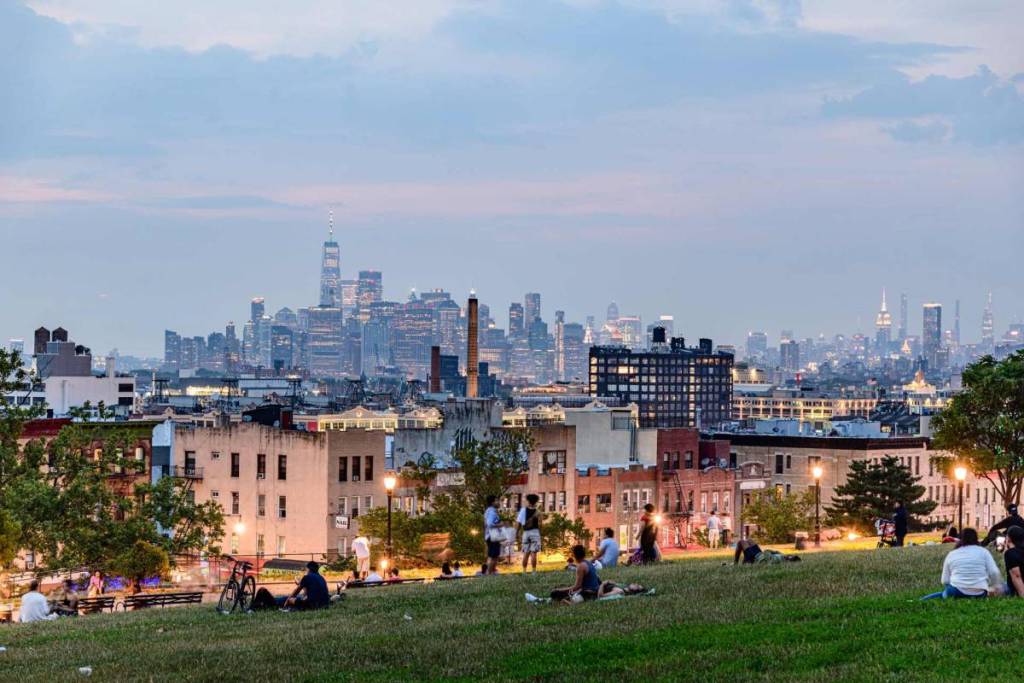

The East Coast might have the best cities (no, we’re not biased at all!) but every now and then, a change of scenery is welcome. The good news? You don’t need to hop on a six-hour flight to California to soak in a bit of West Coast magic.
Tucked away in Brooklyn, Sunset Park offers a surprisingly similar vibe. Here, steep, tree-lined streets slope downward past rows of vibrant historic homes, opening up to one of the most breathtaking elevated views in all of New York City.
While you won’t find cable cars or the Golden Gate Bridge, Sunset Park captures that same coastal, hilly charm with its dramatic terrain, colorful architecture, and postcard-worthy vistas—all for the price of a subway ride. It’s living proof that one of NYC’s best summer escapes has been hiding in plain sight.
What to Know Before You Go
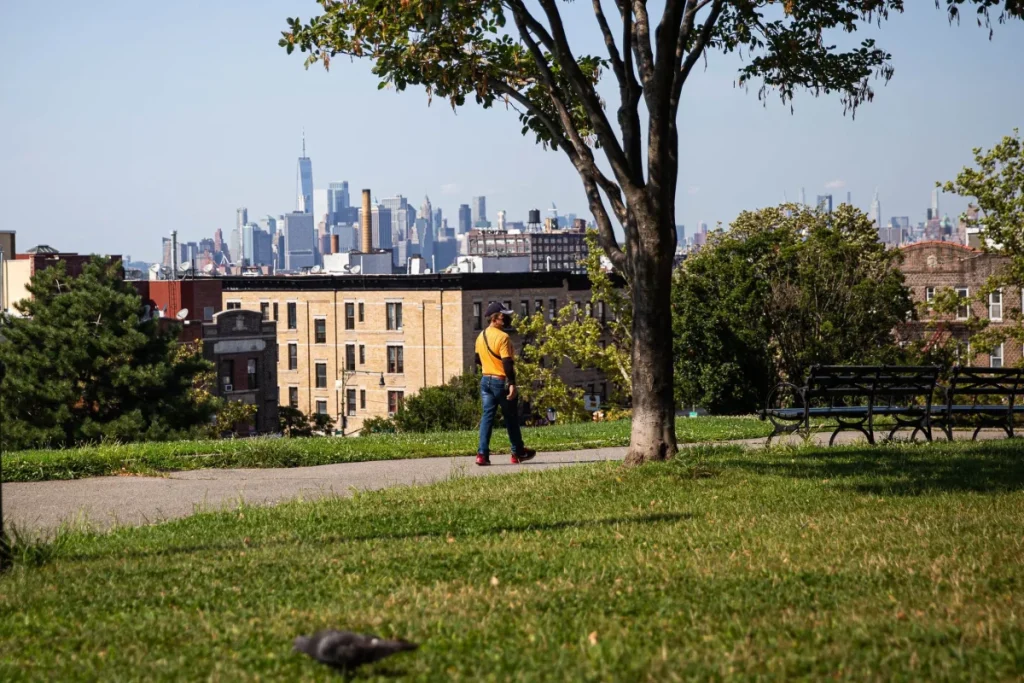
Perched atop one of Brooklyn’s highest natural points, the neighborhood’s namesake park is the central crown jewel. Sitting on its grassy hillside feels like standing on a giant balcony overlooking the entire region.
- The View: The park boasts an unobstructed 360-degree panorama stretching across Lower Manhattan’s skyline, the New York Harbor, the Statue of Liberty, Governors Island, and even the hills of New Jersey on a clear day.
- Best Time to Visit: True to its name, late afternoon into golden hour is pure magic. Local musicians often play acoustic sets as the sun dips below the horizon, lighting up the Manhattan skyline in shades of pink and gold.
- Vibe: Unlike crowded spots like Brooklyn Bridge Park, Sunset Park maintains a deeply local, laid-back atmosphere where neighbors gather for afternoon picnics, pickup soccer, and casual sunset watching.
The History Behind Brooklyn’s Highest Peak
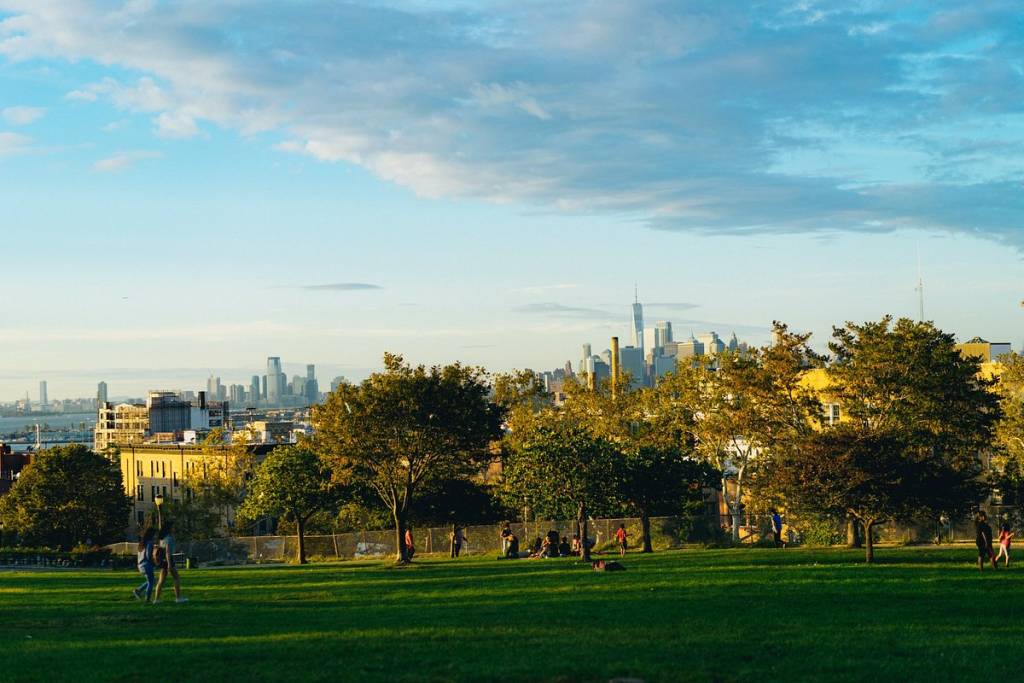
Long before it became a vibrant modern enclave, this elevated ground played a pivotal role in American history. During the Revolutionary War in 1776, the site served as a strategic high point during the Battle of Brooklyn (the Battle of Long Island).
By the late 19th and early 20th centuries, as industrial working-class families moved into the area, the city acquired the land to construct the park between 1891 and 1896. Architects designed it specifically to take advantage of the natural topography, preserving its steep slopes.
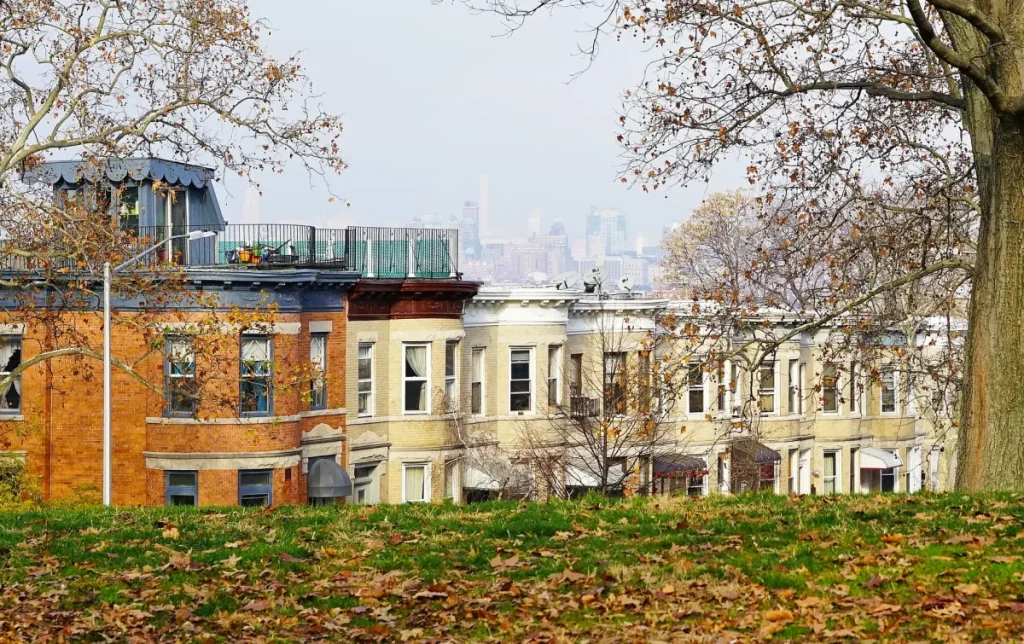
The surrounding residential streets grew alongside the park, lined with classic brownstones, limestone rowhouses, and wood-framed homes built primarily between the 1890s and 1920s.
Today, much of the historic residential core is preserved as a landmarked district, keeping its architectural charm remarkably intact.