


New York is officially on high alert. 🥶
Governor Kathy Hochul has declared a statewide State of Emergency ahead of a major winter storm expected to slam large portions of New York this weekend — bringing heavy snow, dangerous wind chills, and conditions she warned could turn deadly if not taken seriously.
“I’m preparing for the worst case scenarios here in New York,” Hochul said during a press conference Thursday morning, urging residents to stock up, limit travel, and stay indoors as extreme cold and snow move in.
Hochul opened her briefing yesterday morning with a clear warning to New Yorkers enjoying mild conditions — especially in NYC.
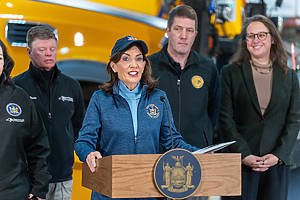
“Do not be misled by the balmy day we’re having here in New York City,” she said. “All across the state, New Yorkers are at risk of an extreme weather event — the likes of which we have not seen in many years.”
According to the governor, the most dangerous conditions are expected Saturday through Monday, with Saturday shaping up to be the coldest day.
Wind chills are forecast to plunge to:
- Minus 40 to 50 degrees in the North Country and Mohawk Valley
- Minus 30 degrees in other upstate regions
- Minus 5 to 10 degrees in downstate areas, including NYC
“When this touches your skin, if you’re not properly covered — every inch of you — you can succumb to frostbite in seconds,” Hochul warned.
Significant snow expected across NYC, Long Island, and the Hudson Valley
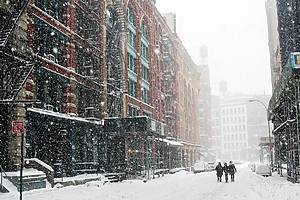
In addition to brutal cold, Hochul confirmed that a significant snowstorm is expected to impact southeastern New York, including New York City, Long Island, and the Hudson Valley.
Current projections at this moment show:
- Lower Hudson Valley: 1–5 inches
- Capital Region: 2–6 inches
- East of Lake Ontario: 6–8 inches
- NYC, Long Island, Hudson Valley: Up to one foot of snow possible
“These projections are changing by the hour,” Hochul said. “But this is coming for you.”
The storm could also impact the Monday morning commute, prompting state officials to encourage remote work and reduced travel.
State employees to work remotely, plows and crews pre-deployed
Hochul announced that all state employees will work remotely on Monday, and urged private employers to follow suit to keep roads clear.
“Our snowplows are doing their job. They need space,” she said, warning drivers not to crowd plows as conditions worsen.
The state has already mobilized:
- Nearly 6,000 utility workers on standby
- DOT and Thruway plows pre-positioned statewide
- Emergency management teams deployed in advance
“If power lines come down and we have areas without power for any period of time, it can be dangerous,” Hochul said, referencing her own experience enduring a week-long power outage during a Buffalo storm.
It’s also already possible that schools may have a snow day on Monday, keeping kids home and off the roads too.
Hochul’s blunt advice: stock up now, stay home later
The governor emphasized that preparation needs to happen before the cold sets in, not during it.
“Try to not be outside as much as you can,” she said. “That might mean stocking up on groceries and water and your pet food and baby food and flashlight batteries — everything you may need now.”
For those who must be outside — including first responders and essential workers — Hochul offered unusually specific advice:
- Dress in multiple layers, fully covering all exposed skin
- Wear insulated hats, gloves or mittens, and thick socks
- Use hand and foot warmers before stores sell out
- Stay hydrated with warm beverages — but avoid caffeine
“Do not bring a thermos of coffee with you,” she said. “Just bring hot water.”
What to keep in your car (this could save your life)
Hochul also urged drivers to treat their vehicles like emergency kits in case they become stranded.
“What you have in your car could save your life — or the lives of your children,” she said.
Her checklist included:
- A shovel
- Food and water
- Extra clothing and blankets
- Flashlights and batteries
- A fully charged phone
- And one unexpected item: cat litter
“If you’re stuck in a ditch, put it under your tires — it’ll give you traction,” Hochul explained.
What a State of Emergency actually means
A State of Emergency doesn’t automatically ban travel or shut down businesses — but it allows the state to deploy resources faster, coordinate agencies, prepare shelters or warming centers, and request federal assistance if needed.
For residents, it’s a clear signal: conditions are serious, and preparation matters.
“This is a dangerous situation on our roads,” Hochul said. “So please, take this very seriously.”
New Yorkers are urged to monitor forecasts closely, limit unnecessary travel, and follow updates from local officials as the storm approaches.
Stay warm and stay safe New York. 🫡