

For nearly a century, the Second Avenue Subway was New York’s most legendary “ghost” project—a mythical line that lived mostly on blueprints and in the dreams of exhausted East Side commuters.
First proposed in 1929 to replace the old elevated trains, the project was derailed by everything from the Great Depression to World War II.
It wasn’t until the early 1970s that the city finally broke ground, actually digging several massive tunnel segments under East Harlem. But when the city hit a fiscal breaking point in 1975, workers simply walked away, leaving behind “dead-end” tunnels that sat silent and empty for over 40 years.
But following the massive success of Phase 1 in 2017, and a well-needed approval for the next phase last August, the city is officially gearing up for the next chapter.
The MTA has confirmed that Phase 2 of the Second Avenue Subway is moving into high gear, with major civil construction on the new tunnel set to begin in 2026.
This phase will finally (start to) bring the Q train into East Harlem, transforming transit access in a part of the city that’s been under‑served for decades.
The Route: Bringing the Q to 125th Street
While Phase 1 brought us to 96th Street, Phase 2 is arguably the more vital link.
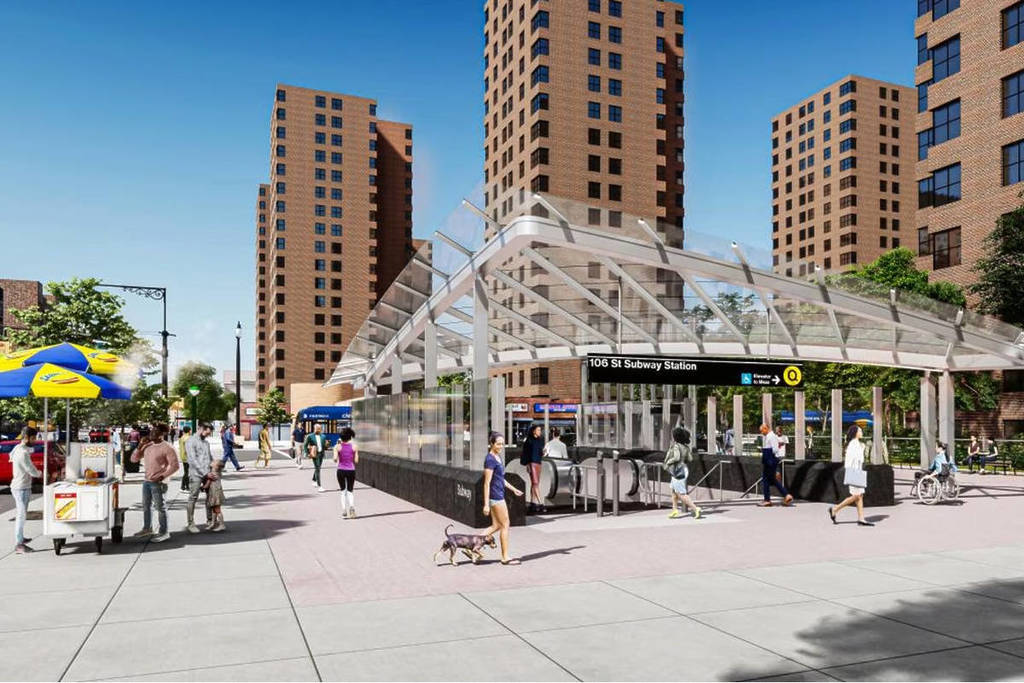
This 1.5-mile extension will stretch from 96th Street up Second Avenue to 125th Street, then jog west along 125th to Park Avenue. The three brand‑new, fully accessible stations include:
The three brand-new, fully accessible stations include:
- 106th Street and Second Avenue
- 116th Street and Second Avenue
- 125th Street and Lexington Avenue
The 125th Street stop is set to become one of the city’s most important transit hubs, allowing riders to transfer seamlessly between the Q train, the 4, 5, and 6 lines, and the Metro-North Railroad.
What’s happening in 2026?
According to the official MTA project timeline, 2026 is when the heavy civil work on the new tunnel really begins.
After years of utility relocation (the unglamorous work of moving pipes and wires), the city will see the arrival of Tunnel Boring Machines (TBMs).
These mechanical giants will begin carving out the path toward Harlem, marking the most significant underground work in Manhattan since the original Phase 1 tunnels were finished.
The project is backed by a massive $3.4 billion federal grant, ensuring that despite local budget debates, this extension is full steam ahead.
Why this is a game-changer for New Yorkers
If you’ve ever tried to squeeze onto a 6 train at rush hour, you know why this matters. Phase 2 is expected to:
- Serve 100,000 daily riders, significantly thinning out the crowds on the overcrowded Lexington Avenue line.
- Slash commute times by up to 20 minutes for residents traveling from East Harlem to the West Side or Brooklyn.
- Improve accessibility, with every new station featuring state-of-the-art elevators and modern safety features like those seen in recent pilot programs.
Looking ahead
While we won’t be boarding the first trains just yet, and the stations’ currently projected opening dates being September 2032, the 2026 construction phase is at least great news for now to get the ball rolling.
This project is a cornerstone of the MTA’s 2025-2029 Capital Plan, which aims to modernize a system that is over 120 years old.
As crews start excavating station caverns and, in 2027, the TBMs begin chewing north under Second Avenue, New York will be one step closer to finally realizing a subway line first seriously proposed in the late 1920s.
Stay tuned for more updates as the city prepares for a major transit transformation.