
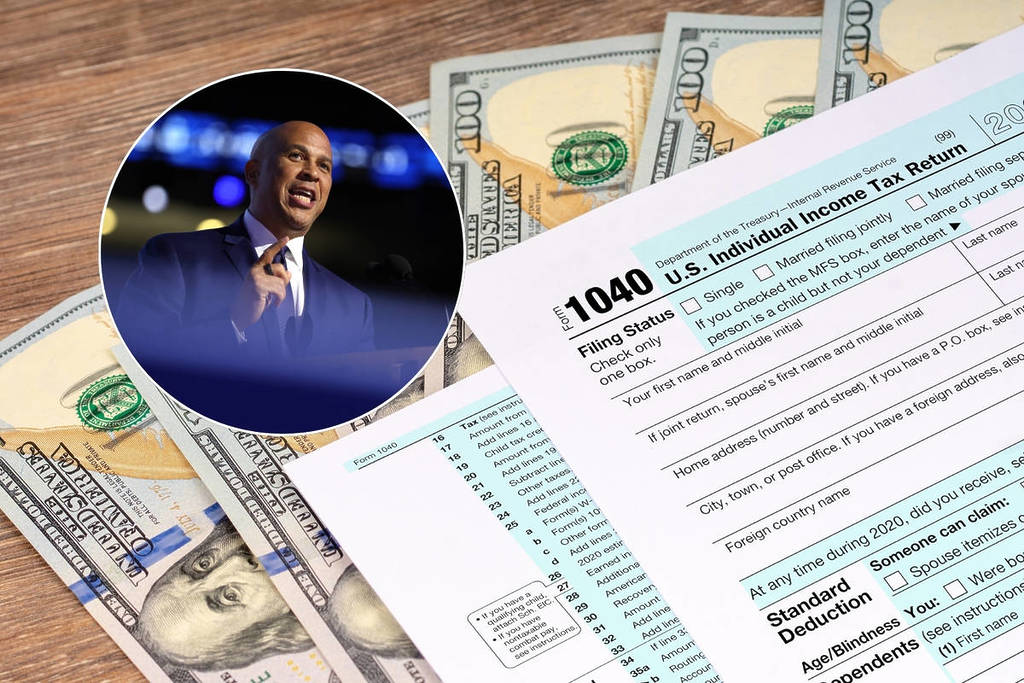

Big news for your bank account: there is a major new push to make the first $75,000 of your income completely federal income tax-free.
Since we all know living in New York City often feels like your paycheck is doing a disappearing act before it even hits your pocket, this proposal—dubbed the Keep Your Pay Act—could be a total game-changer for millions of New Yorkers.
Here is the latest status on the project as of March 2026 and what it actually means for your wallet.
What’s the deal with the $75,000?
Introduced on March 9, 2026, by Senator Cory Booker and possible 2028 presidential candidate, the Keep Your Pay Act aims to radically overhaul how much of your money the government actually touches.
The core of the plan is a massive hike in the standard deduction. Under this proposal:
- Married couples filing jointly would pay $0 in federal income tax on their first $75,000 of earnings.
- Single filers and heads of households would receive “proportional relief,” which effectively means a huge chunk of your salary stays in your checking account instead of heading to D.C.
For the average New York family, this could slash federal tax bills by an estimated 85%. In a city where a “cheap” lunch is now $20, that extra cash is more than just a bonus—it’s a lifeline.
It’s not just about the $75k
The bill isn’t a one-trick pony. It also includes several “pocketbook” upgrades designed to help with the high cost of living:
- A “Baby Bonus”: A one-time $2,400 bonus for families in the year a child is born.
- Boosted Child Tax Credits: Increasing the credit to $3,600 for kids aged 6-17 and $4,320 for those under six.
- Expanded EITC: Delivering more relief to younger workers (ages 19-24) and seniors (65+) who don’t have children at home.
Who is paying for this?
According to Booker’s plan, funding would come from closing tax loopholes used by the ultra-wealthy and large corporations, as well as raising the corporate tax rate and increasing taxes on stock buybacks.
The NYC connection
While this is a federal proposal, it hits home particularly hard in New York.
Recently, the state has been leaning into this specific $75,000 threshold for relief.
For instance, many New Yorkers are still seeing the tail end of the Inflation Refund Checks which prioritized individuals earning $75,000 or less.
What happens next?
As of March 10, 2026, the bill has been officially announced and is beginning its journey through the Senate.
It faces a lively debate ahead, especially with the 2026 midterms on the horizon, but it has already sparked a massive “kitchen table” conversation across the tri-state area.
Whether it passes in its current form or gets tweaked in committee, the message is clear: there is a serious, high-level effort to make sure you keep more of what you earn.