

The oldest stories around New York are not always tucked behind museum ropes or hidden inside a country estate with a gift shop.
Sometimes, they sit beside a busy Westchester road in Upstate NY, behind a small white frame church that has watched more than two centuries of traffic, weather, and New York history pass by.
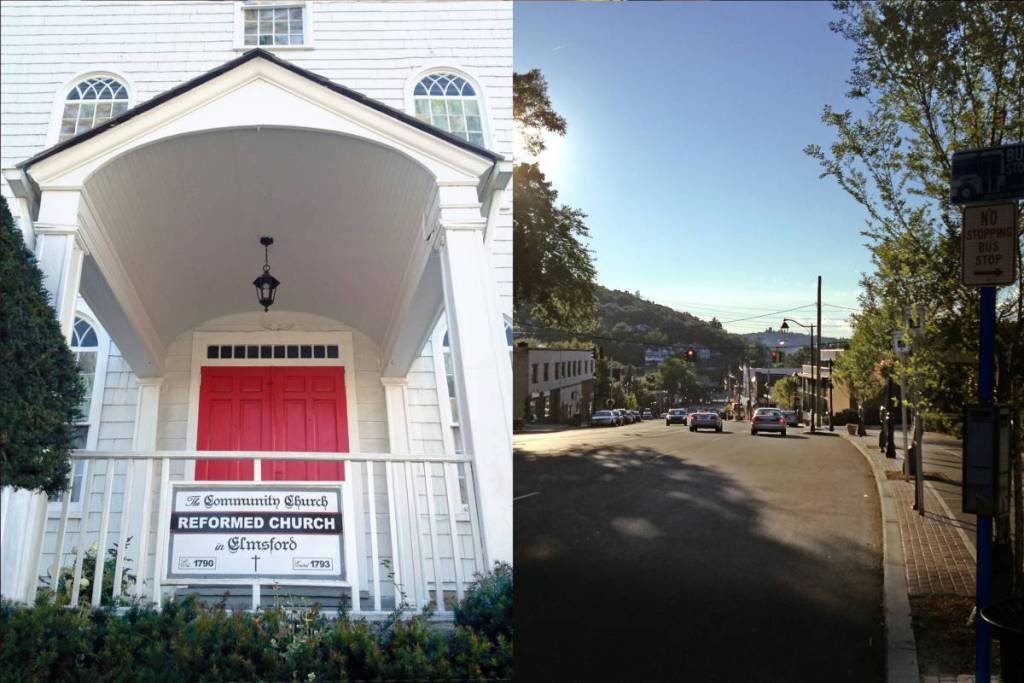
At 30 South Central Avenue in Elmsford, roughly 35 miles north of Manhattan, the Elmsford Reformed Church and Cemetery still stands much as it did when it was built in 1793.
The historic site is listed on the National Register of Historic Places, and its simple frame church, hand-hewn beams, wooden shingles, and hand-wrought nails preserve an increasingly rare look at late-18th-century Westchester craftsmanship.
Then there is the cemetery.
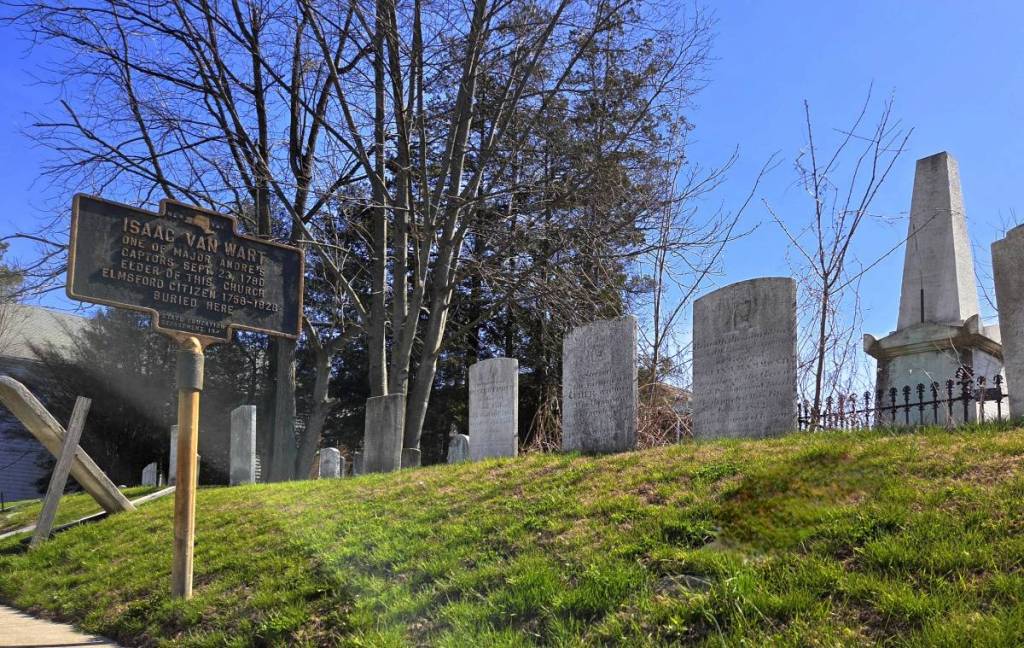
Just beside the church stands the marble monument of Isaac Van Wart, one of the three Westchester militiamen who captured Major John André in 1780.
André was the British Army officer caught carrying documents connected to Benedict Arnold’s plan to surrender West Point, a conspiracy that could have shifted the course of the Revolutionary War.
A church built before the 1800s
The congregation began in 1790 as the Presbyterian Church of the Town of Greenburgh. Three years later, its members completed the frame meeting house along the old Saw Mill River Road, creating a building now regarded as one of Westchester County’s oldest surviving places of worship.
Its construction is a major part of what makes it special. The structure was assembled with hand-hewn beams, wood shingles, and hand-wrought nails, tangible traces of a period before power tools, highways, and, remarkably, even the ratification of the Bill of Rights had settled into everyday American life.
According to Clio’s historical site entry, much of the exterior has remained intact, while the interior preserves historic building fabric alongside early-19th-century classical decorative work.
The church was added to the National Register of Historic Places in 1983, recognizing its local importance in settlement history and architecture.
The man who captured Major André
The quiet cemetery immediately south of the church is where this little Westchester landmark becomes a Revolutionary War story with the pacing of a spy thriller.
Van Wart, along with John Paulding and David Williams, intercepted Major André on September 23, 1780, as André tried to return to British lines with papers related to Arnold’s plan to turn over West Point.
The trio refused the bribe André reportedly offered them, then delivered him to American authorities, helping expose the plot.
A detailed review of the André capture identifies Van Wart as the youngest of the three captors and confirms his burial at Elmsford; the New York State historical marker record identifies him as one of André’s captors, an elder of the church, and an Elmsford citizen.
Van Wart was more than a name on a Revolutionary War monument. After helping capture André, he returned to a quieter life in Westchester, serving as an elder of the Greenburgh church and living in Elmsford until his death in 1828. His marble memorial, erected the following year, still stands in the cemetery beside the 1793 church, its inscription preserving his role in the André capture.
The churchyard holds more Revolutionary-era history beyond Van Wart.
Abraham Martling, whose marker says he was present at the Battle of Yorktown, is buried here, as is Solomon Utter, remembered in local accounts for building the gibbet where André was hanged.
The church is no longer active
The building’s survival is its own story, but it’s important not to treat it like an active church or conventional museum.
After years of declining membership, Elmsford Reformed Church held its final service on Sunday, December 31, 2017.
The church’s then-governing Reformed Church in America regional body noted that the building would remain because of its National Register status, even as its congregation closed.
The church and cemetery were subsequently transferred to the Village of Elmsford in February 2018, according to Clio’s historic-site profile.
This means that the landmark does not function as a daily museum with publicly posted interior visiting hours, it can only be viewed from the outside.
How to see it respectfully
Where: Elmsford Reformed Church and Cemetery, 30 South Central Avenue, Elmsford, NY
From NYC: Elmsford is roughly 35 miles north of Midtown by car, though actual travel time will depend heavily on traffic.
What to look for: The 1793 meetinghouse exterior, its plain frame construction, the adjoining cemetery, and Van Wart’s marble memorial.
Know before you go: The church is a historic landmark and the grounds are an active burial place, not an attraction designed for high-volume tourism. Stick to publicly accessible areas, do not climb on or touch monuments, and do not assume the church interior is open.
For a deeper dive after a visit, the Westchester County Historical Society maintains research collections at the Westchester County Archives and Records Center in Elmsford, with a reading room that is generally open on Wednesdays from 9:30 am to 3:30 pm. Check its current schedule before making a dedicated trip.