

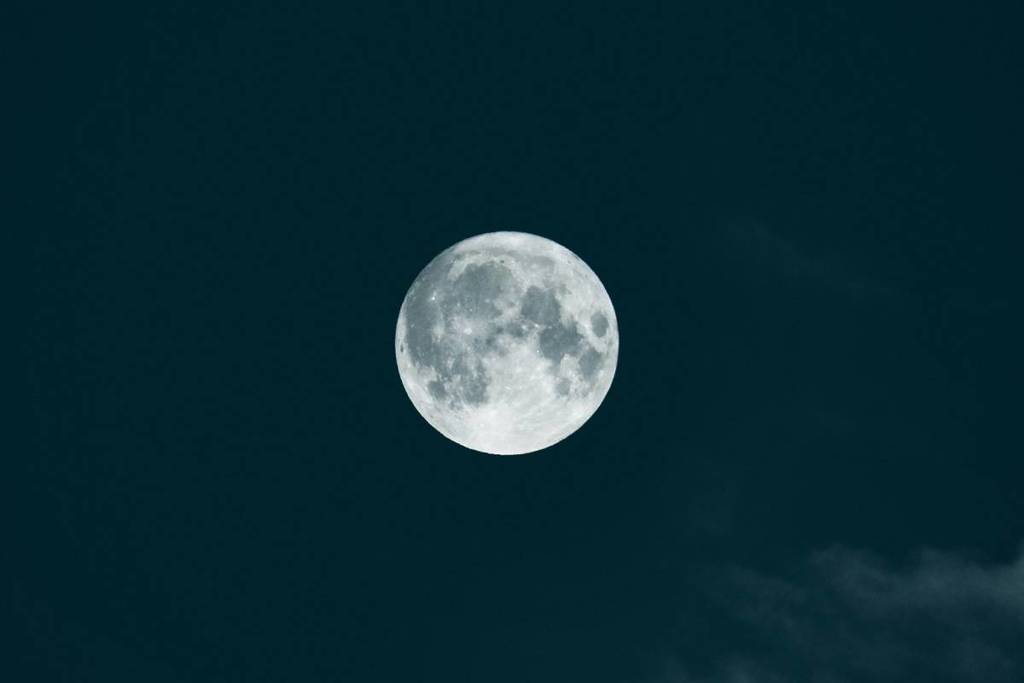
Missed the Full Harvest Supermoon last October? Well, astrophiles will be thrilled to hear there’s more where that came from – the Full Beaver Supermoon will rise in the sky tonight, and it’s the closest Supermoon of the year.
When to See the Full Beaver Supermoon in NYC
According to the Old Farmer’s Almanac, the Full Beaver Supermoon reached peak illumination this morning, Wednesday, November 5th, at 8:19 am EST.
Since the moon was below the horizon at that time, the best time to view it was yesterday and tonight, just after sunset, or moonset before sunrise, when it may appear larger and warmer in color. Look towards the eastern horizon at the following times:
Tuesday, November 4th
- 🌕 Moonrise: 4 pm
- 🌇 Sunset: 4:48 pm
- 🌝 Moonset: 5:18 am
Wednesday, November 5th
- 🌕 Moonrise: 4:35 pm
- 🌇 Sunset: 4:47 pm
- 🌝 Moonset: 6:40 am
You won’t need any special equipment to see the moon, though binoculars or a telescope can come in handy.
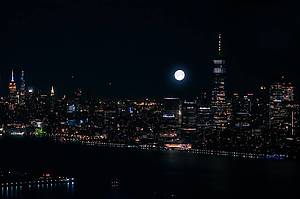
What Makes This Moon So Special
November’s Full Beaver Moon orbits closer to Earth than any of the other Full Moons this year, making it one of the three Supermoons of 2025.
At its nearest point, the Beaver Moon will be just 221,817 miles (356,980 kilometers) from Earth, making it the closest and brightest Supermoon of the year.
What is a Supermoon?
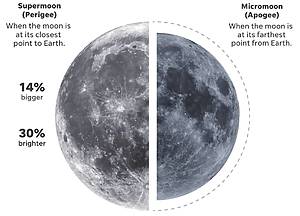
Supermoon is the catchier term for a perigean Full Moon, which is when the Full Moon happens at or near its closest point to Earth in its oval-shaped orbit.
According to the UK Natural History Museum, Supermoons appear about 14% bigger than a typical full moon and shine about 30% brighter – it’s all just a “Moon illusion,” though. Planetary science researcher Professor Sara Russell states:
The Moon, of course, doesn’t vary in size according to where it appears in the sky. It may be that when it’s near the horizon there are objects, like trees and buildings, that it can be compared in size to, whereas in the middle of the sky there are no points of comparison, which makes it seem smaller.
Why is it Called the Beaver Moon?
Though some full moon names have obscure origins, the Beaver Moon’s etymology is straightforward: it’s named after beavers! The Old Farmer’s Almanac writes:
This is the time of year when beavers begin to take shelter in their lodges, having laid up sufficient food stores for the long winter ahead. During the fur trade in North America, it was also the season to trap beavers for their thick, winter-ready pelts.
Other Fun Names
Across cultures, this moon has been called several other names, including:
- Digging (or Scratching) Moon – a Tlingit name relating to animals foraging for fallen nuts and bears digging their winter dens
- Deer Rutting Moon – a Dakota and Lakota term referring to the time when deer seek mates
- Whitefish Moon – Algonquin term that describes the spawning time for this fish
- Frost Moon – a name from the Cree and Assiniboine peoples referring to the change of season
- Freezing Moon – a name from the Anishinaabe as winter is right around the corner
Whether you’re a lover of celestial events, a photographer, or just want an excuse for a cozy autumn sky gazing night, there aren’t many substantial moon moments left this year, so add this one to your calendar!