
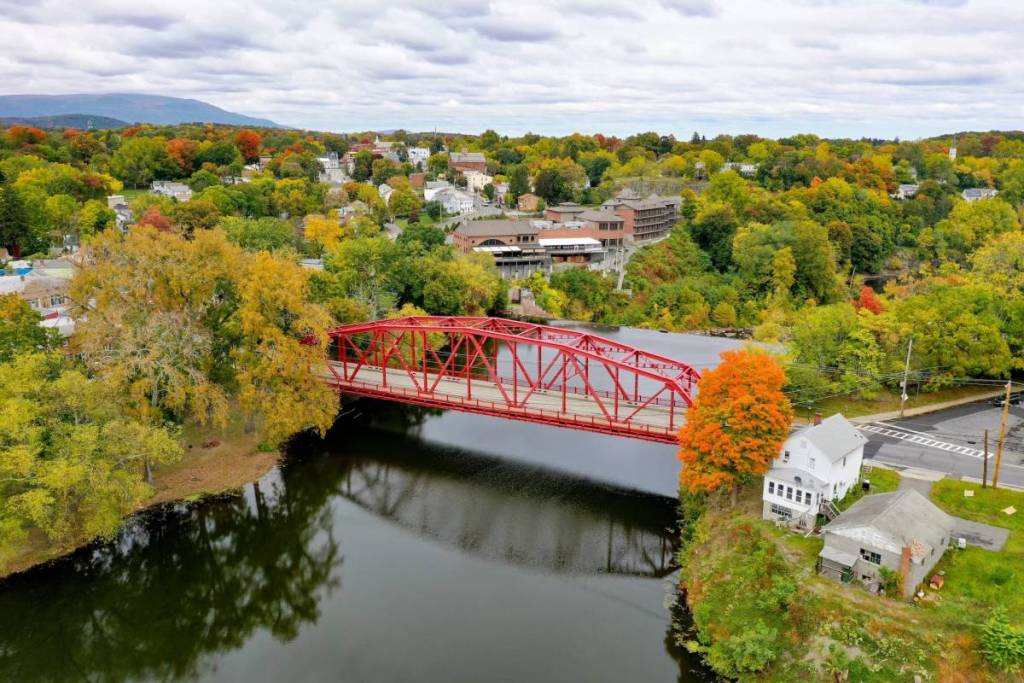

Saugerties, NY has a rather unusual answer to the question of where to spend the night: an 1869 lighthouse reached by a half-mile walk through Hudson River wetlands.
That alone would be a decent reason to head north. Add a monumental stone sculpture built inside an old quarry, a downtown made for browsing, and riverside trails with waterfalls, and the weekend starts filling itself in.
The Hudson Valley destination appears in WorldAtlas’s 2026 list of ten Upstate New York towns described as “U.S. favorites”, alongside places including Cold Spring, Woodstock, and Skaneateles.
Its entry singles out two attractions that make Saugerties feel distinctly different from the usual coffee-shop-and-antique-store escape: Saugerties Lighthouse and Opus 40.
And this fall, there’s a timely reason to put the latter on your itinerary. Opus 40 will close out its season with a November 7 fair featuring makers, live music, local food, fire pits, and a goat named Tarot.
Here are all the details about this eye-catching town, and why right now is an ideal time to visit!
Why Saugerties made the list
WorldAtlas singles out two landmarks that give Saugerties an escape-worthy identity: an 1869 lighthouse where you can spend the night, and a monumental stone sculpture built inside a former bluestone quarry.
Together, they give the town an appealing split personality: a riverside retreat on one side, an ambitious outdoor artwork on the other.
You can spend part of the day watching the Hudson and the rest wandering through stonework that makes an ordinary sculpture garden look fairly restrained.
Sleep inside an 1869 lighthouse
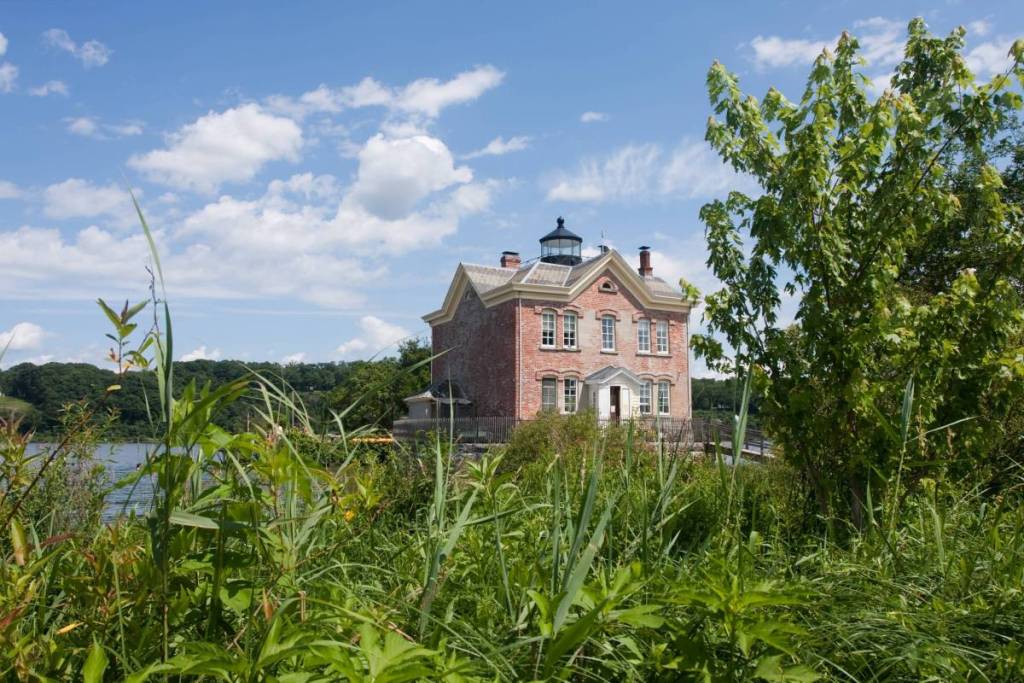
A two-story brick lighthouse with a black lantern room stands on a small island in a calm body of water, surrounded by autumnal trees with yellow and brown foliage, under a clear sky with a forested shoreline in the background.
The Saugerties Lighthouse stands where Esopus Creek meets the Hudson River, with a lantern room above the brick building and water surrounding its remote shoal. It operates as a living museum and a bed-and-breakfast, keeping its original purpose much closer than most historic overnight stays.
Getting there is part of the experience, too.
A half-mile trail crosses the Ruth Reynolds Glunt Nature Preserve, passing freshwater tidal wetlands, willow and maple trees, and tidal pools before opening onto the river. It’s a short walk, but one with a practical catch: parts of the route flood with the tides. Check the lighthouse’s visiting information and tide guidance before setting out.
For overnight guests, the bed-and-breakfast is open Thursday through Sunday nights year-round, with river-view rooms, breakfast, and access to the operational lighthouse tower during the stay. Reservations and availability need checking ahead of time.
For fall day-trippers, the distinction matters: regular public interior tours run on summer Sundays from June through August, not throughout October and November.
The nature trail remains open daily from sunrise to sunset, subject to conditions, while the riverside deck has weekday-only visiting hours and is closed to day visitors on weekends.
Walk through a quarry-sized artwork
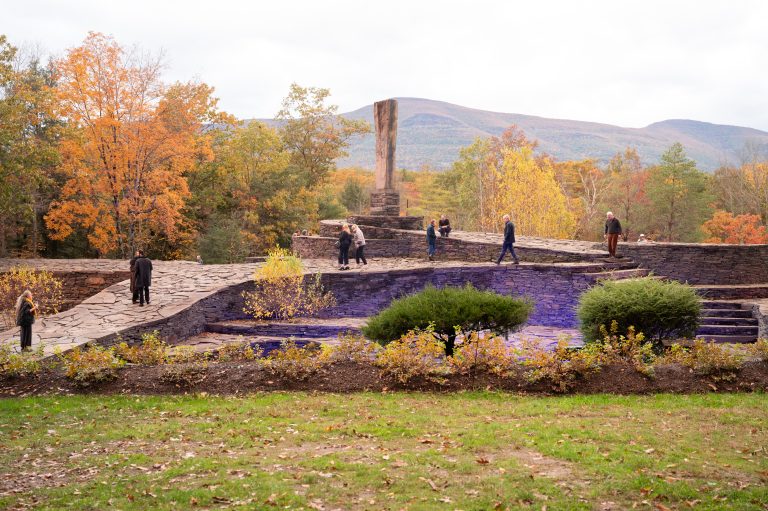
A stone sculpture on a multi-level stone platform surrounded by autumn-colored trees with a large green mountain in the background under an overcast sky.
Opus 40 is the other attraction WorldAtlas highlights, and it is not the kind of sculpture you take in with a quick glance.
Artist Harvey Fite used hand-powered tools to transform stone left in a former bluestone quarry into an enormous environmental artwork. The result is a landscape of stone terraces, passages, and carefully shaped surfaces that visitors explore on foot.
The 6.5-acre sculpture sits within a larger 63-acre outdoor sculpture park, with trails, a gallery, and a museum.
Give it time. Opus 40 recommends at least an hour for the sculpture, gallery, and museum, and longer if you want to explore the trails or stop for a picnic. Its current regular hours are Thursday through Monday, 10 am to 5 pm, with last entry at 4 pm. Check the calendar before traveling, particularly as the season approaches its end.
The most useful date for a late-fall trip is Saturday, November 7.
The Opus 40 Fall Faire runs from 11 am to 4 pm during the venue’s last open weekend of the season. Expect artist-makers, live music, local food vendors, hot cocoa and coffee, fire pits, gift-shop specials, and the aforementioned Tarot.
It gives the visit a different pace: explore the stonework, browse the stalls, find something warm to drink, and stay outside a little longer.
Add waterfalls and downtown browsing
For another outdoor stop, Falling Waters Preserve in nearby Glasco is free and open year-round from sunrise to sunset — featuring a landscape of waterfalls, a meadow with Catskill views, and rock ledges descending toward the Hudson.
There is a surprisingly direct NYC connection here, too.
The preserve contains the remains of the Mulford ice house, which once stored 10,000 tons of ice harvested from the river each year. Before refrigeration, that ice was shipped to New York City for use during the warmer months.
Back in downtown Saugerties, shops, galleries, and restaurants make a good counterpoint to the trails. Leave space for an unhurried browse rather than treating the village as somewhere to pass through between parking lots.
For planning purposes, the lighthouse places Saugerties roughly 100 miles from Manhattan. A car is the simplest option for combining downtown, the lighthouse, Opus 40, and the preserve in one trip. The lighthouse also lists Amtrak stations in Rhinecliff and Hudson, with onward car or taxi travel required.
Don’t miss out! Follow us on Facebook, Instagram, and now on WhatsApp, too!