
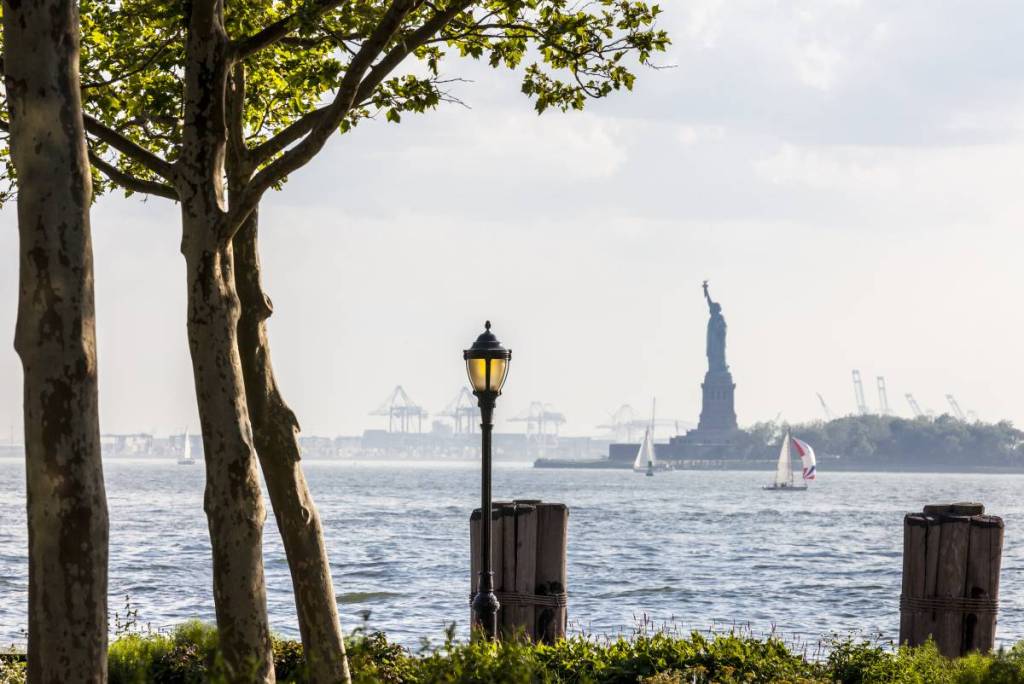

Walk to the southern tip of Manhattan, to the park most locals still call Battery Park even though its official name is simply The Battery, and there she is, sitting right across the harbor.
No ticket, no line, no boarding pass required!
It’s a different vantage point than what you’d get from a paid sightseeing cruise around the harbor, sure.
But it costs nothing, comes with an actual bench to sit on, and never sells out. Show up close to sunset and the whole harbor turns gold behind her, the kind of view most people assume you have to pay for from a boat deck.
The building right behind you on that same waterfront, Castle Clinton, happens to be where you’d buy a ferry ticket today if you ever decided you wanted to get closer instead of just look.
That’s not really a coincidence. It’s a very long-running habit.
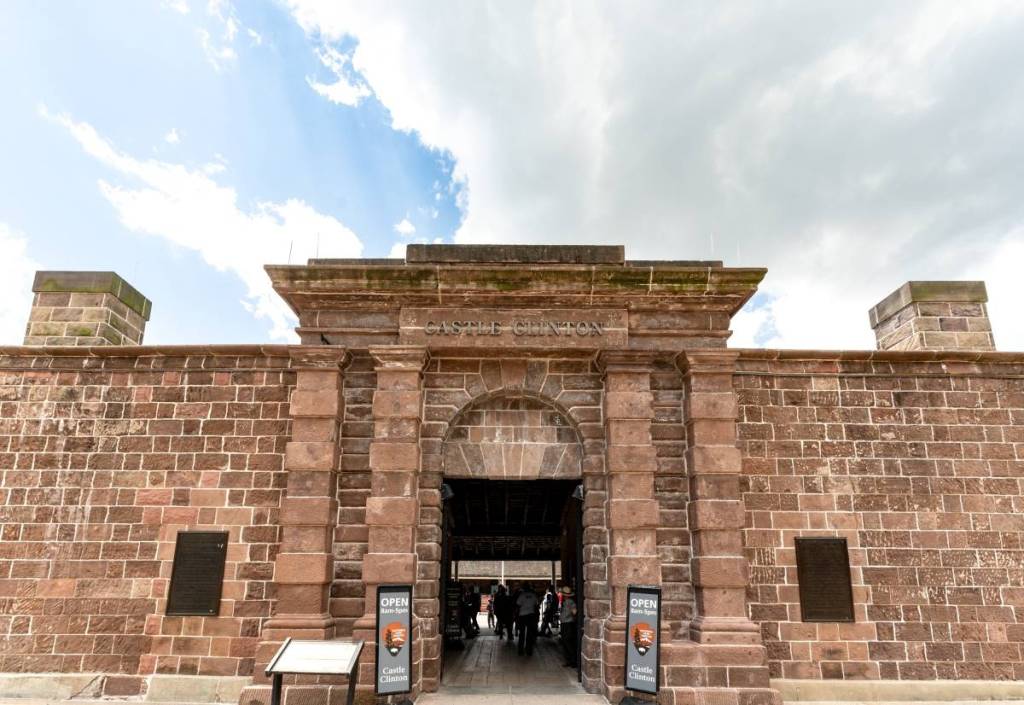
Battery Park puts her in view before you even leave dry land
From the promenade at the Battery, the statue sits across the harbor as a small, unmistakable shape rather than a close-up. There’s no single best bench for it either, the entire waterfront path functions as one long, free viewpoint.
Castle Clinton itself has a genuinely wild backstory.
It started out as a fort called Southwest Battery, built between 1808 and 1811 to help defend New York Harbor ahead of the War of 1812, part of a chain of four harbor forts that also included Fort Wood on what’s now Liberty Island itself, according to the National Park Service.
It was armed with 28 cannons, each capable of firing a 32-pound cannonball roughly a mile and a half, about the same distance separating the fort from where the Statue of Liberty stands today. Despite all that firepower, the fort never once fired on an enemy ship, the harbor’s defenses were strong enough that the British never tested them.
In 1817, the fort was renamed Castle Clinton in honor of DeWitt Clinton, the New York mayor who later became governor. Once the war fear passed, the city converted it into a 6,000-seat entertainment venue called Castle Garden in 1824, and it hosted opera singer Jenny Lind’s American debut in 1850 before the building found an entirely new purpose.
On August 3, 1855, it reopened as the Emigrant Landing Depot, the country’s first official immigration station, predating Ellis Island by decades. Over the next 35 years, more than 8 million immigrants passed through its doors, according to the New York Historical Society, the vast majority arriving from Germany, Ireland, and later Italy and Eastern Europe.
When the station closed in 1890 and Ellis Island took over two years later, Castle Clinton spent decades afterward as a public aquarium before its final restoration into the National Monument and ticket office that stands there today.
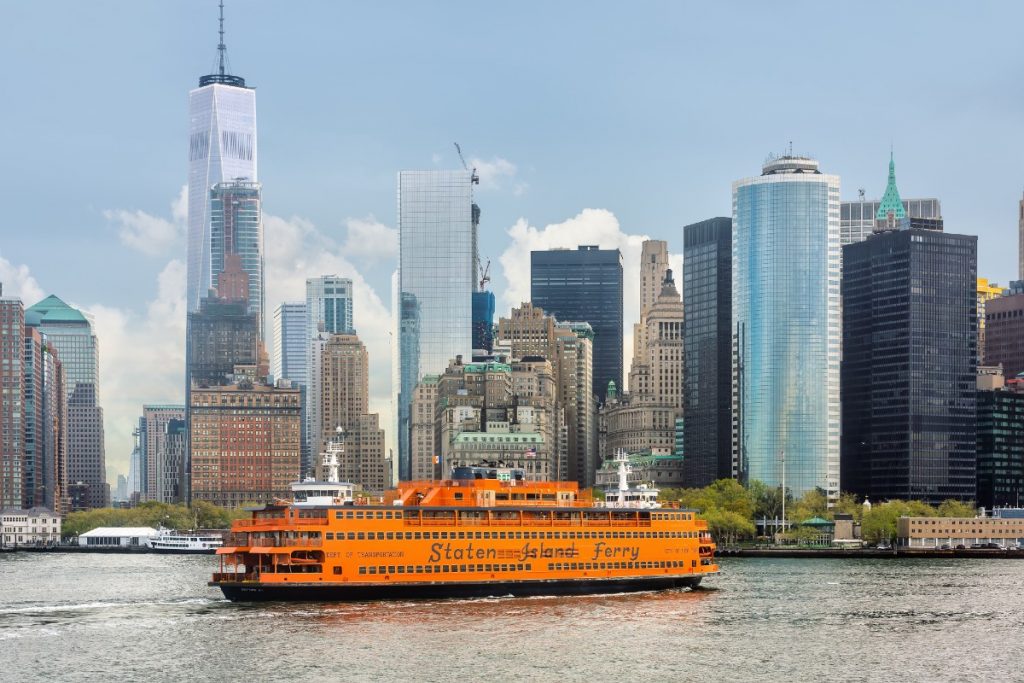
The Staten Island Ferry gets you closer, and it’s still free
For a view with a lot more movement behind it, the Staten Island Ferry is the better bet, and it hasn’t cost a rider a cent since 1997.
The fare wasn’t always free.
It sat at 50 cents for decades until Mayor Rudy Giuliani eliminated it entirely that July, folding the change into the MTA’s broader “one city, one fare” transfer policy, according to contemporary reporting from the New York Times.
Today, city law actually requires it to stay that way, with the fare permanently written into the city’s Administrative Code.
The numbers behind the ride are its own kind of impressive. Per NYC DOT, the route now carries more than 16 million passengers a year on the 5.2-mile run between Whitehall Terminal in Manhattan and St. George Terminal on Staten Island, a crossing that takes about 25 minutes each way. The boats run 24 hours a day, 365 days a year, with departures as frequent as every 15 to 20 minutes during rush hour.
A few things worth knowing before you board:
- Stand on the right side of the boat heading toward Staten Island for the clearest shot of the statue
- The fleet’s signature paint job wasn’t always orange, the boats were originally white, then switched to a reddish-maroon in 1926 before eventually landing on the municipal orange still used today, a color choice made specifically to keep the boats visible in fog and snow
- Service never fully stops, meaning the free view is technically on offer at 3am too, for anyone patient enough to wait for the next boat
None of that gets you onto Liberty Island itself, or close enough to actually touch the pedestal or the copper she’s made of.
For that, you’ll need an actual ticket and a ferry that stops.
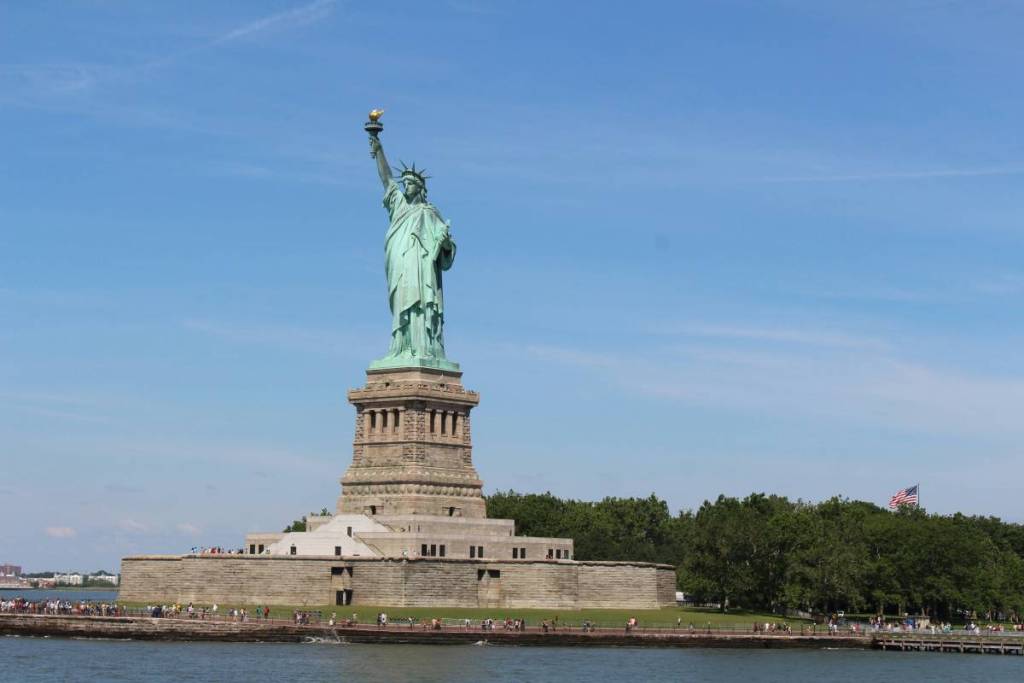
When you’re ready to get up close
The free views are real, and worth doing at least once just for the history packed into that stretch of waterfront.
But if a photo from the shore isn’t going to cut it and you want to stand at the base of the statue, walk through Ellis Island’s Great Hall, or see the Wall Street and 9/11 Memorial sites on the same trip, this combined Statue of Liberty & Ellis Island ticket bundles priority ferry access with a self-guided audio tour covering all three, starting at $59.
13 October 2026 09:00 + more dates
20 Broad
It’s the easiest way to get the “full experience” especially since it’s all packed into one.
Either way, the harbor isn’t going anywhere, and there are plenty of ways to get both ferry views and Statue of Liberty views regardless of cost.