
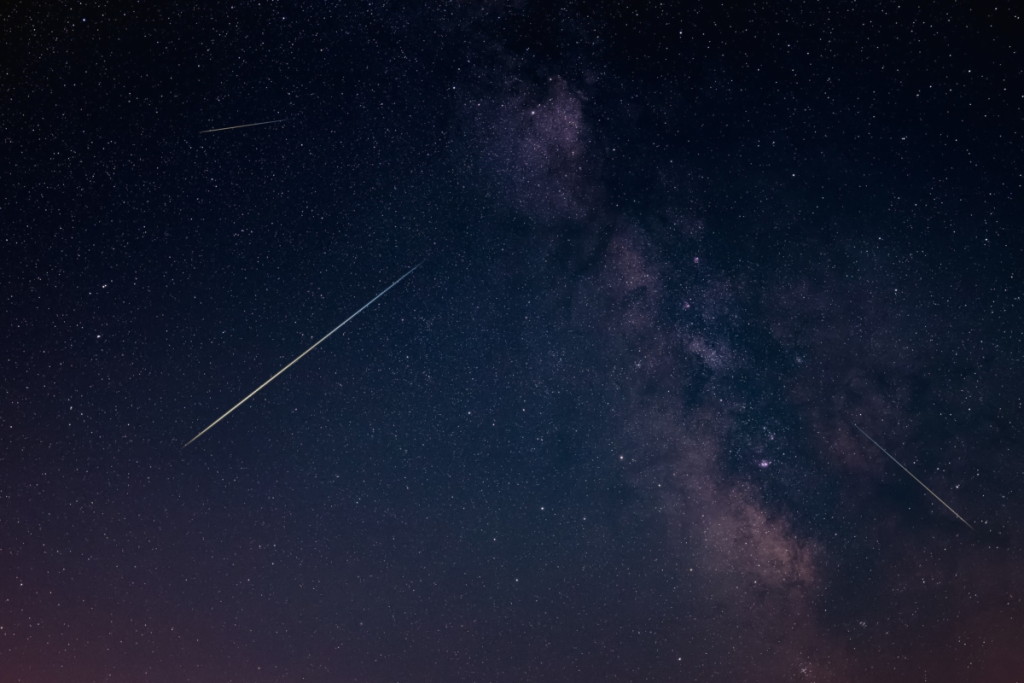

Between the rare lunar occultation that made Jupiter seemingly vanish from the sky this morning and Saturn shining at its brightest this month, October 2026 is shaping up to be a stellar month for stargazing in NYC. And there are still plenty of reasons to look up: two meteor showers will light up the October night sky, with the Draconid meteor shower peaking this week and the Orionids reaching their peak later this month.
The Orionids are especially worth watching. NASA calls them one of the “most beautiful showers of the year,” thanks to their bright, fast-moving meteors and the lingering, glowing trails they leave behind.
So if you’re looking for the best meteor shower viewing opportunities in NYC this October, here’s exactly when to look up.
Draconid Meteor Shower: Peaks October 8
- Active: October 6–10, 2026
- Peak: Thursday, October 8, 2026
- Meteors per hour: About 5–10
- Best time to view: After sunset (early evening)
- Where to look: Northern sky, toward the constellation Draco
- Source: 21P/Giacobini-Zinner comet
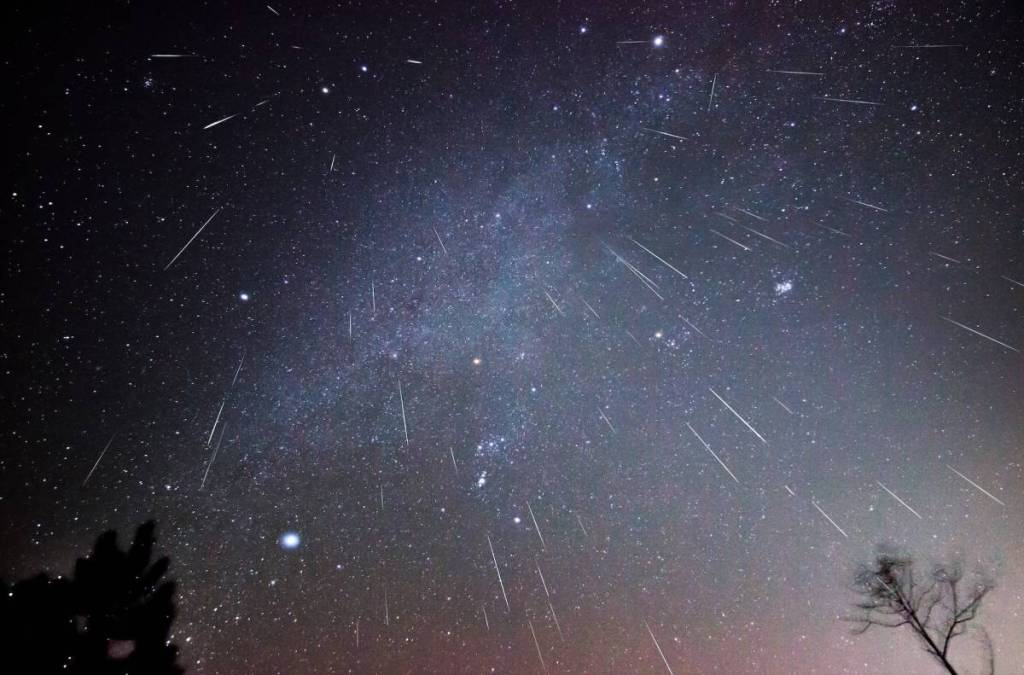
The Draconid meteor shower is usually a relatively quiet event, producing only around 5 to 10 meteors per hour. However, it’s highly unusual for a major reason: unlike most major meteor showers, the Draconids are best viewed in the evening shortly after sunset, rather than in the early morning hours.
That’s because the shower’s radiant point—the area of the sky where the meteors appear to originate—is near Draco the Dragon, a constellation that sits highest in the sky shortly after nightfall. As the night progresses, the radiant sinks lower toward the horizon.
In other words, you don’t have to wake up before dawn or completely wreck your sleep schedule to see the Draconids.
And while the Draconids are typically a minor shower, they have been known to put on some seriously dramatic displays. In 1933, the shower produced a meteor storm with hundreds of meteors per minute, while more recent outbursts have also produced unusually high rates.
While NASA’s 2026 forecast doesn’t predict a massive Draconid outburst, the waning crescent moon means the sky will be relatively dark during the peak. This gives New Yorkers a fantastic chance of spotting fainter shooting stars.
Orionid Meteor Shower: Peaks October 21–22
- Active: October 2–November 7, 2026
- Peak: Night of October 21 into the morning of October 22
- Meteors per hour: About 10–20 under dark skies
- Best time to view: After midnight, especially before dawn
- Where to look: Toward the constellation Orion (but scan the entire sky)
- Source: Debris from Halley’s Comet
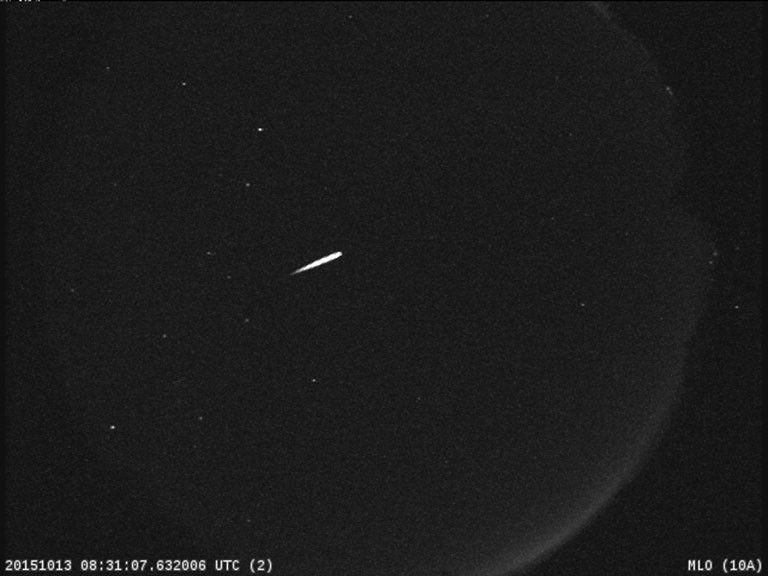
While the Orionid meteor shower is already active, it doesn’t reach its peak until later this month, with the best viewing expected overnight on October 21 into October 22. This is the shower you’ll definitely want to bookmark.
The Orionids are famous for producing bright, fast-moving meteors that zip through Earth’s atmosphere at roughly 41 miles per second. The best part? They often leave behind glowing “trains”—incandescent trails of debris in the wake of the meteor that can linger for several seconds or even minutes.
There is one catch for the Orionid meteor shower in 2026: a bright waxing gibbous moon (~76% full) will wash out some of the fainter meteors. Your best chance of seeing the shower will come in the pre-dawn hours after the Moon sets, when the sky gets darker and the Orionid radiant is higher.
How to See the Meteor Showers from NYC
You don’t need a telescope, binoculars, or any special equipment to see a meteor shower—your naked eyes are actually the best tool for the job.
The biggest challenge for stargazing in NYC is light pollution. The brighter the sky around you, the harder it will be to spot fainter meteors, so try to get somewhere with as little artificial light as possible.
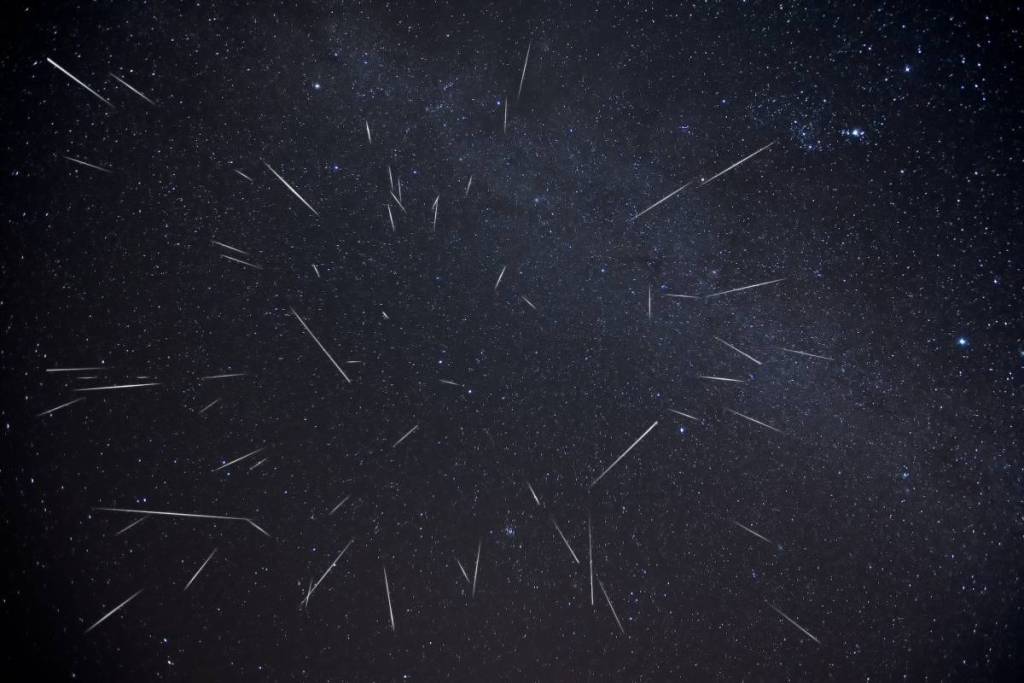
Here are a few tips for the best meteor shower viewing:
- Find the darkest sky you can. Light pollution will drown out all but the brightest meteors, so getting away from NYC’s brightest streets and buildings can make a big difference
- Give your eyes time to adjust. Allow at least 20–30 minutes for your eyes to become accustomed to the darkness. Avoid looking at your phone during that time, too
- Find a spot with a wide-open view. You don’t need to stare at the radiant point. Meteors can appear anywhere across the sky, so the more sky you can see, the better
- Skip the telescope. Meteor showers move quickly and cover a huge portion of the sky, making them much easier to watch with the naked eye
- Be patient. Meteor activity isn’t perfectly consistent. You could go several minutes without seeing anything and then suddenly spot multiple meteors in quick succession
- Check the weather before heading out. Even the best meteor shower won’t be visible through clouds
So whether you’re catching the Draconids after sunset this week or staying up late for the glowing trails of the Orionid meteor shower later in October, NYC’s October night sky has plenty of magic to offer.
Don’t miss out! Follow us on Facebook, Instagram, and now on WhatsApp, too!