
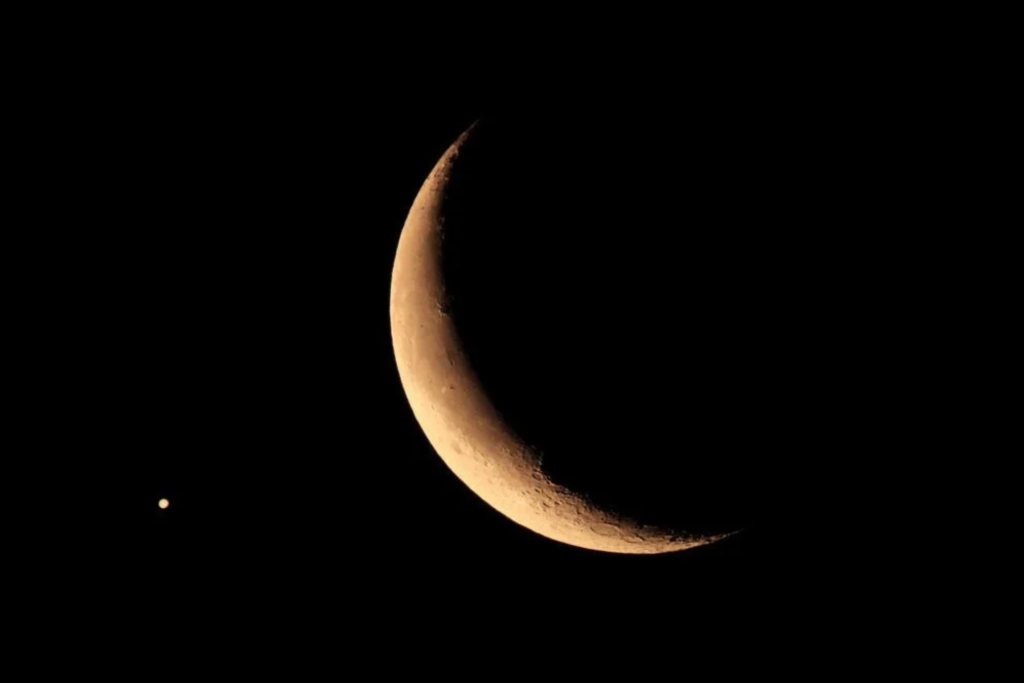

If you’re an early riser you’ll want to add stargazing to your morning routine tomorrow. On Tuesday, October 6, a waning crescent moon will pass directly in front of Jupiter, temporarily blocking the bright planet from view. It to appear to completely “vanish” from the sky before reappearing roughly an hour later.
While this rare celestial event will be visible across parts of the eastern and central U.S., NYC stargazers are getting one of the best views in North America. And this isn’t an everyday occurrence–the last time a dark-sky Jupiter occultation was visible from New York City was nearly 22 years ago, in December 2004.
Here’s everything you need to know to catch Tuesday morning’s celestial disappearing act.
What is a “Jupiter Eclipse?”
No, Jupiter doesn’t have magical powers, and this isn’t an early Halloween trick.
Astronomers call this event a lunar occultation, which happens when the Moon passes directly in front of a more distant object from our perspective on Earth. You might also hear it referred to as a “Jupiter Eclipse.”
On Tuesday morning, a waning crescent moon (about 20% illuminated) will glide in front of the planet. Unlike a star, which can seem to blink out almost instantly, Jupiter is so massive that its disappearance and reappearance will each take about a minute as the Moon’s edge moves across the planet’s disk.
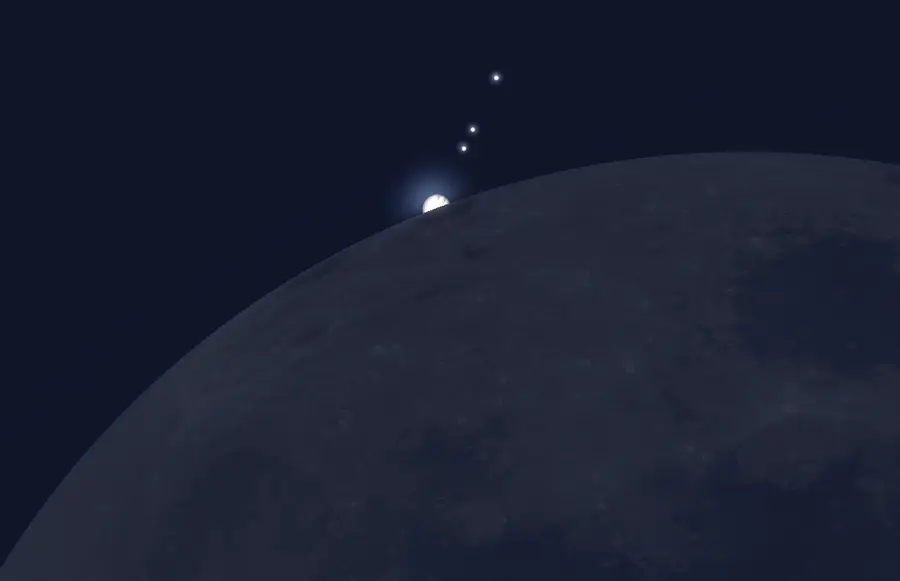
As the planet emerges from the Moon’s darker, Earth-lit edge, astronomer Joe Rao from New York’s Hayden Planetarium notes that observers may see what looks like a “sparkling diamond” perched on the edge of the lunar disk.
When & where to watch in NYC
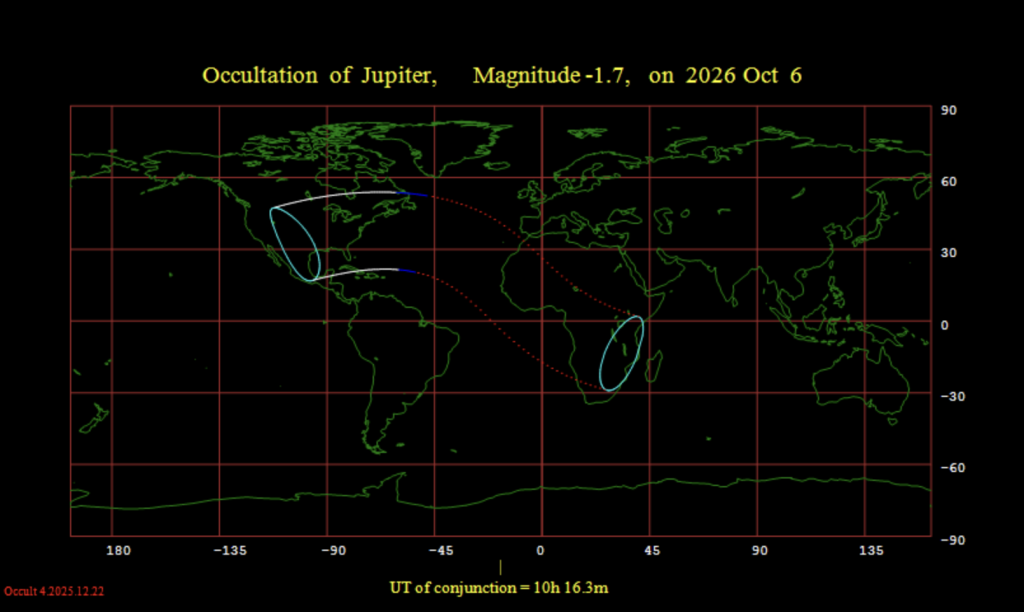
The October 6 lunar occultation of Jupiter will be visible across parts of North America, but the eastern U.S. is especially well positioned for the event.
Based on predictions from the International Occultation Timing Association (IOTA), New Yorkers should look toward the east-northeast in the predawn hours.
For New York City, the approximate times are:
- 4:23 am: Jupiter disappears behind the Moon
- 5:27 am: Jupiter reappears
Pro Tip: For the best view, find a location with an unobstructed view toward the east-northeast and start watching several minutes before 4:23 am. Jupiter and the Moon will be relatively low in the sky, so buildings and trees could easily get in the way.
Do I need a telescope?
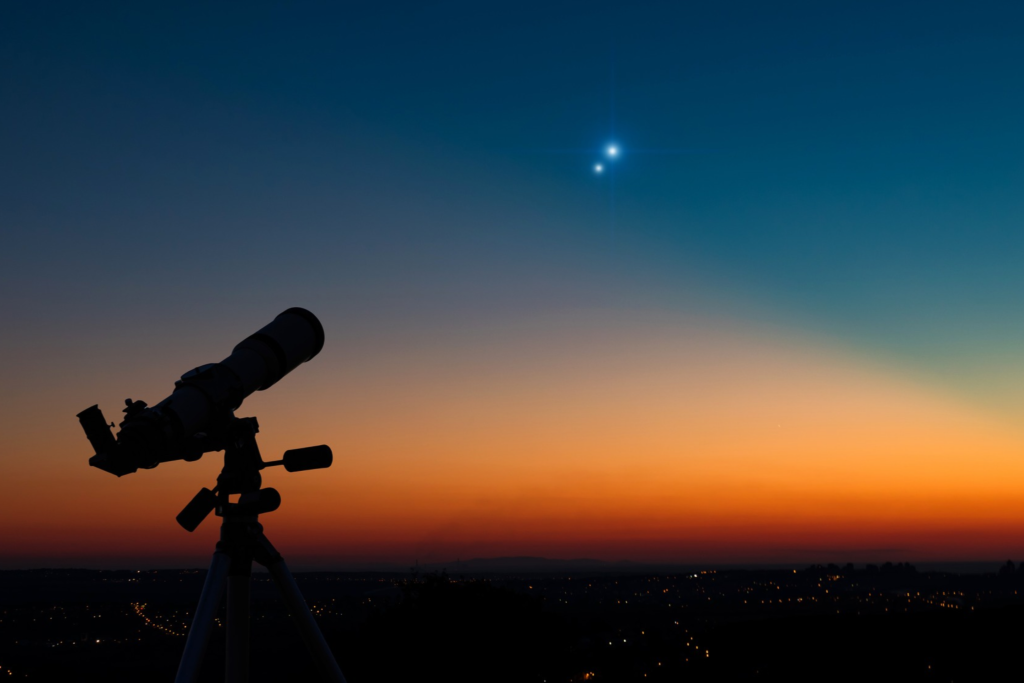
Jupiter is easily bright enough to see with the naked eye, but you’ll want binoculars or a small telescope to get the absolute best view of the planet disappearing behind the Moon’s bright edge.
A telescope will make the event even more impressive, allowing you to see Jupiter’s four largest moons, known as the Galilean moons: Io, Europa, Ganymede, and Callisto.
Depending on your location and equipment, you can watch these moons disappear one by one shortly before or after Jupiter itself, creating an even more interesting celestial show.
Jupiter’s reappearance at 5:27 am will be much easier to spot without any optical equipment since it will emerge from the darker, unlit side of the Moon.
A rare sight for New York City
Jupiter occultations aren’t actually rare on a worldwide scale. They happen regularly as the Moon passes in front of the planet from different locations around Earth.
What’s rare is seeing one from a specific location under a dark sky.
According to Rao, a dark-sky occultation of Jupiter occurs from a given location about once every 13 years on average. For New York City, however, the wait has been considerably longer.
The last time a dark-sky Jupiter occultation was visible from NYC was nearly 22 years ago on December 7, 2004. Before that, we’d have to travel back in time more than 115 years to September 3, 1889. The New York Times described the late 19th-century spectacle quite poetically:
The moon looked like half of a big custard pie, and Jupiter like a firefly getting ready to take a bite out of it. Imperceptibly, Jupiter crowded along, nearer and nearer to the big light of the night. Dimmer and dimmer it grew as it neared the moon, its light paling into insignificance as the light of the tallow candle pales into insignificance before a calcium light.
Astronomers are calling this the best Jupiter occultation for North America since 2004.
So set that alarm, find a spot with a clear eastern view, and hope for clear skies—because Jupiter is about to pull off one seriously impressive disappearing act. Lucky for us, the current forecast calls for clear skies!
Don’t miss out! Follow us on Facebook, Instagram, and now on WhatsApp, too!