
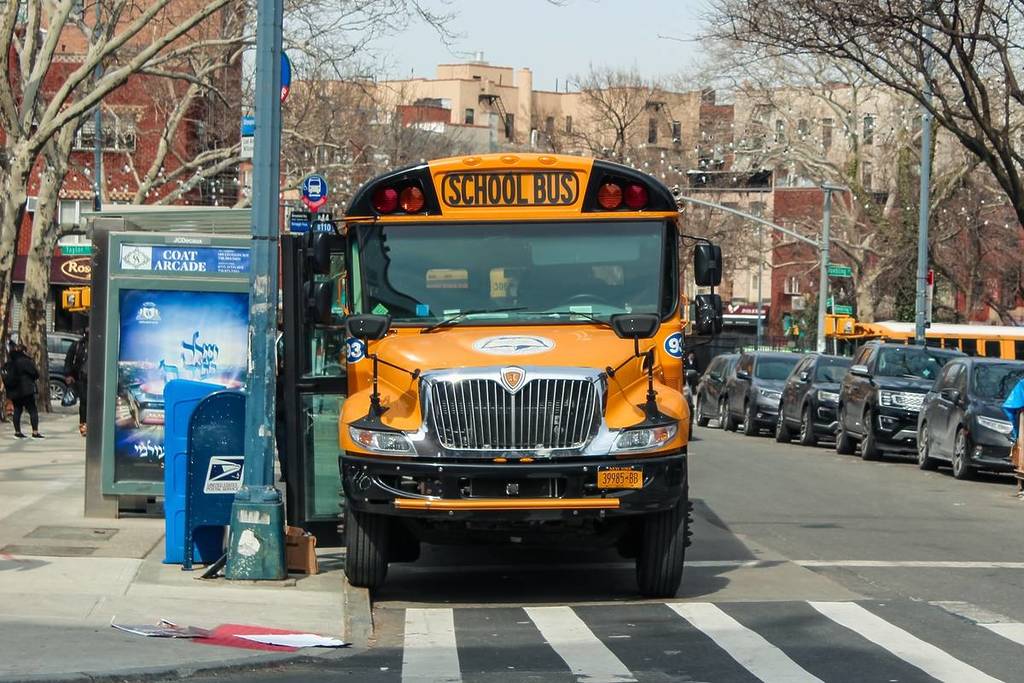

After a summer spent making the most of the city’s streets, parks, beaches, and everything in between, New York’s little ones are officially heading back to the classroom today! And while a new school year means new teachers, new routines, and plenty of oversized backpacks making their way across the city, it also means New Yorkers will be seeing some changes around school zones.
As students and families settle back into their daily commutes, the city is rolling out hundreds of new 15-mph “slow zones” near schools, along with other street-safety improvements designed to make the areas around schools safer for kids and pedestrians, as per a recent press release.
Here’s what to know about the changes coming to NYC streets as the new school year gets underway.
What is a school slow zone?
A school slow zone reduces the standard citywide speed limit—typically 25 mph—down to 15 mph on streets directly adjacent to schools during school hours.
These lower limits give drivers more time to react to sudden foot traffic and drastically reduce the risk of injury or crashes involving young pedestrians.

Which streets are affected and how many schools are included?
The slow zone expansion targets streets directly surrounding elementary, middle, and high school buildings across all five boroughs.
- 800 School Locations: Roughly 800 school sites across the city are slated to have 15-mph slow zones fully operational by the end of 2026.
- Neighborhood Footprints: The lowered speed limits apply to immediate school blocks, surrounding crosswalks, and designated drop-off corridors.
Drivers should watch closely for updated speed limit signs, digital speed displays, and increased enforcement near school property.
What other street safety and traffic-calming measures are being added?
Lowering the speed limit is only one component of the city’s broader traffic safety initiative. The DOT is actively redesigning streets surrounding more than 300 schools with physical infrastructure changes, including:
- Wider Pedestrian Spaces: Expanded curb extensions and sidewalks to accommodate heavy foot traffic.
- Safer Crossings: High-visibility crosswalks, shortened crossing distances, and refreshed road markings.
- Traffic-Calming Features: Speed humps, neckdowns, and signal timing adjustments to naturally slow vehicle speeds.

With a new school year officially underway, here’s to new teachers, new friends, new routines, and plenty of memories to come. Wishing all of New York City’s students a happy, safe, and wonderful school year—and a little extra patience for the grown-ups navigating the morning commute, too.