

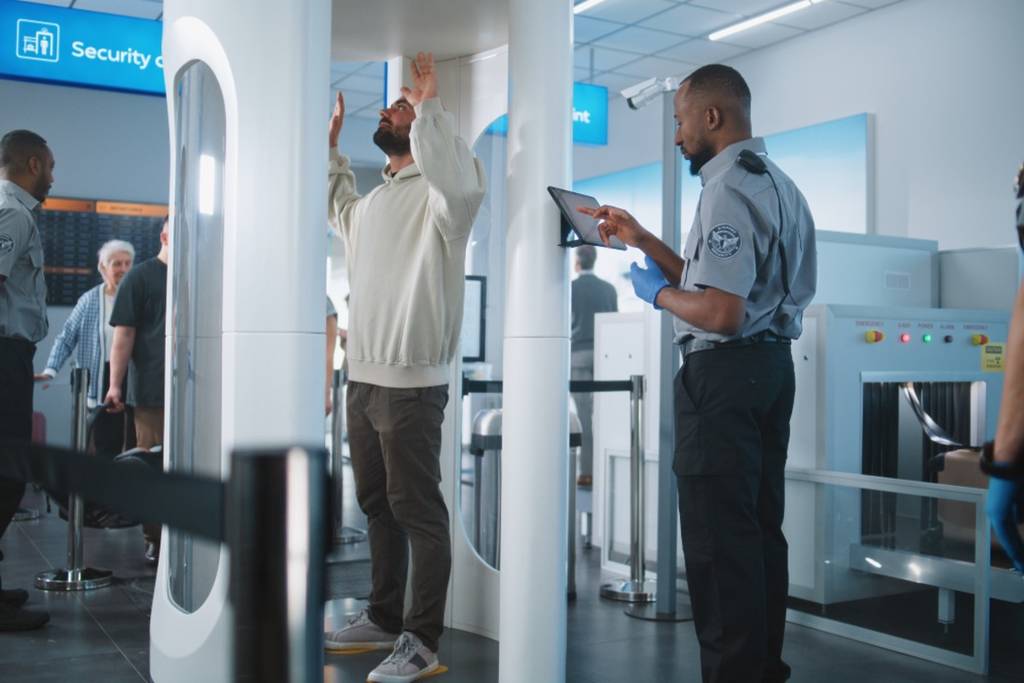
In the word’s of VMA-winning NYC artist Sombr: ‘I don’t wanna get undressed for a [TSA body scanner] all over again.’ No, but in all seriousness, how much can TSA body scanners actually see and should I stop looking TSOs in their eyes after getting scanned?
First, let’s get into the technology behind these machines before answering this question.
How do body scanners work?
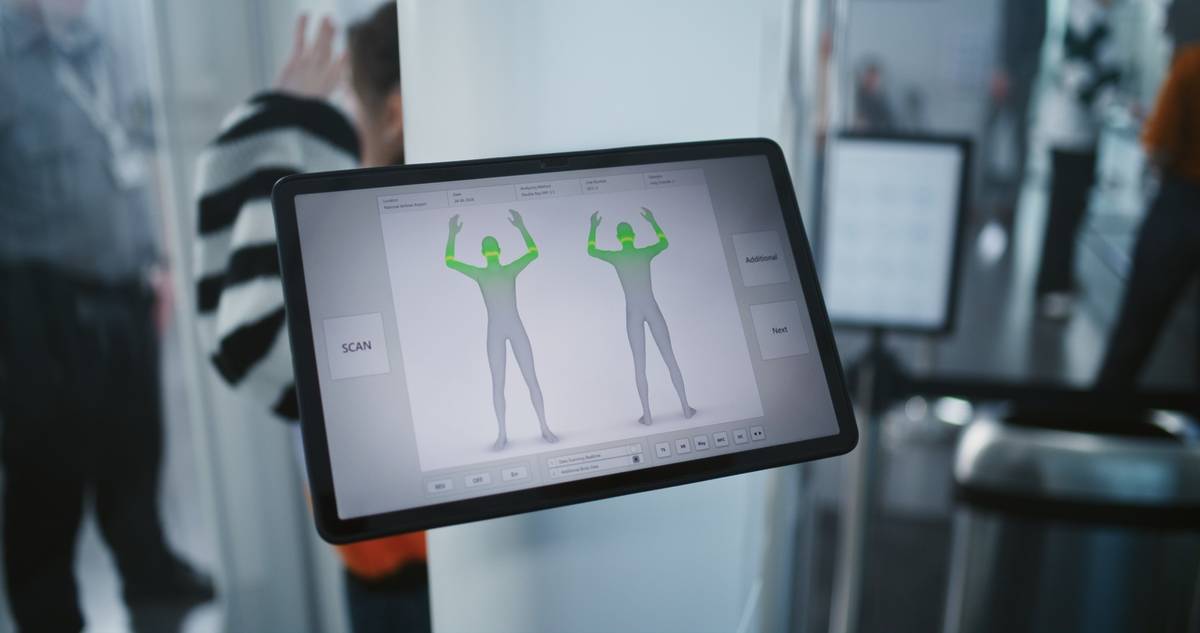
Body scanners are highly efficient security tools that use millimeter waves, a non-iodizing radiation, to generate a generic image of a person and any concealed items. According to the CDC, this generic image closely resembles a “fuzzy photo negative.”
Two antennas rotate around one’s body to construct the image that is then sent to a remote monitor.
While some people worry about radiation, airport security scanners actually use millimeter waves that release thousands of times less energy than a typical cell phone.

Can they really see you naked?
Current airport scanners do not show you naked—however, they may have at one point…
Outdated machines lacked any privacy protections and were once able to conjure a realistic image of a passenger’s body, nooks, crannies and all. Such machines were criticized as ‘virtual strip searches’ and effectively removed from service in 2013.
Nowadays, body scanners are equipped with privacy software and only produce a generic outline of a passenger’s body, used solely to detect any threats on a person.

What could trigger a body scanner?
Body scanners are employed to detect “metallic and nonmetallic threat items,” according to TSA. However, its likely most of us have or will mistakenly set off a body scanner in our lifetime. Common things that can set off a body scanner include:
- Metal objects such as keys, coins, or belts
- Thick hair or hair clips
- Jewelry, including piercings and watches
- Sweat (No, really! It has to do with the millimeter wave technology)
- Clothing with metallic threads, buttons, zippers, or underwire bras
- Medical implants (e.g., joint replacements, metal plates, pacemakers)
- Prosthetics or medical devices (including insulin pumps)
- Folded items in pockets, such as tissues, wrappers, or receipts