

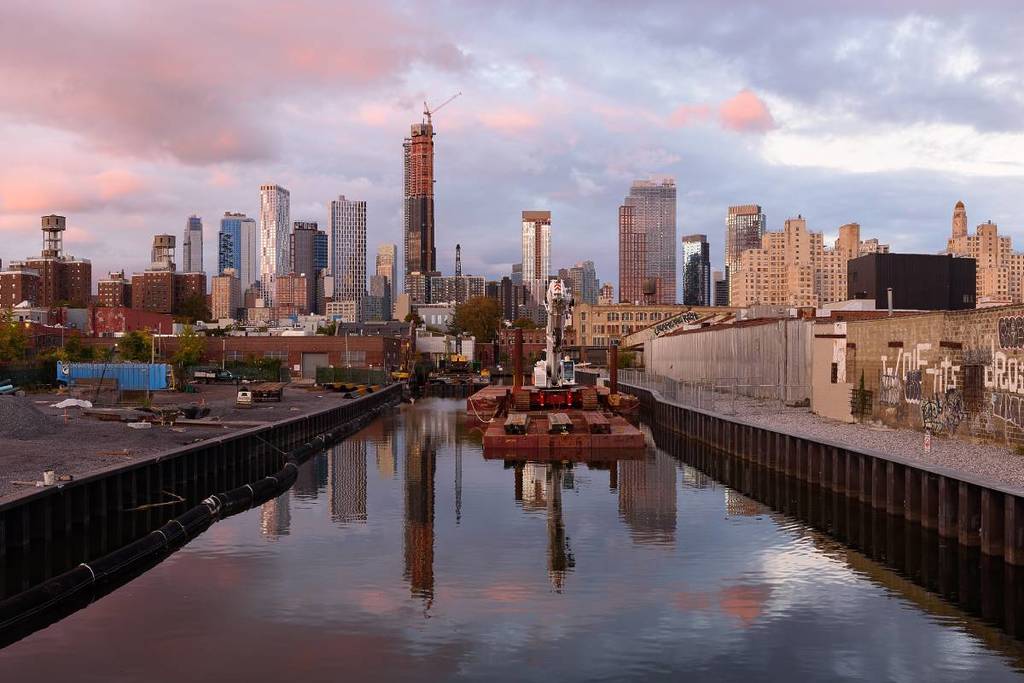

Could New Yorkers soon take a dip in one of Brooklyn’s most infamous waterways? A new proposal from the New York State Department of Environmental Conservation (DEC) may force the city to clean up the polluted Gowanus Canal to the point where swimming and boating could legally be allowed.
The 100-foot wide, 1.8-mile-long canal, currently classified as a Class SD waterway (supporting only fishing), would be upgraded to Class SC, which requires swimmable and boating-friendly water quality standards. The proposal is part of a larger plan affecting 30 waterways across the state.
The timing is no coincidence.
Developers and city officials have long envisioned a transformed Gowanus, following a major rezoning that will add thousands of new apartments, parks, and public spaces to the neighborhood. A swimmable canal would dramatically raise the stakes of that redevelopment. After all, word on the street is that Gowanus is on track to become a mini Copenhagen!
But don’t expect to cannonball off the banks anytime soon–especially since there are a total of 11 combined sewer overflow sites that can discharge to the Canal.
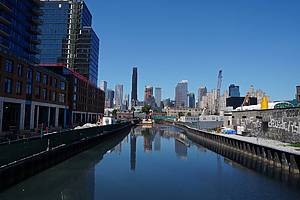
While the proposal could be finalized as early this year, the federal Environmental Protection Agency (EPA) is still in the middle of a massive Superfund cleanup, scheduled to continue for years. On top of that, a giant 8-million-gallon underground sewage overflow tank won’t be ready until 2030.
Environmental advocates like Riverkeeper applaud the new classification as progress, though they caution against imagining the Gowanus as Brooklyn’s next beach. Em Ruby, senior policy coordinator at Riverkeeper, told Crain’s:
This is definitely an improvement for water quality…But because of other circumstances, swimming is not considered a best use.

Still, the thought of a future where kayaks, canoes, and maybe even swimmers crowd the canal is enough to stir curiosity.
For now, Brooklynites will have to stick with paddle tours from groups like the Gowanus Dredgers Canoe Club, who since 1999 have been on a mission to turn one of the city’s most polluted waterways into a destination for fun, activism, and education.