


Trip booked and passport in hand—but is your pet’s passport packed as well? That’s right, travelers taking their pets internationally don’t just need their own passport, but one for their furry friend as well!
Does my pet need a passport to travel?
Ahead of international travel, you always want to make sure you’re abiding by the many passport rules in place: the three-month rule, the six-month rule, the empty pages rule, etc.
However, if you plan on bringing your pet along, they must also have proper documentation at international borders that require a pet’s vaccination records and identification (such as EU countries, the UK, Ireland, Northern Ireland, Malta, and Norway).
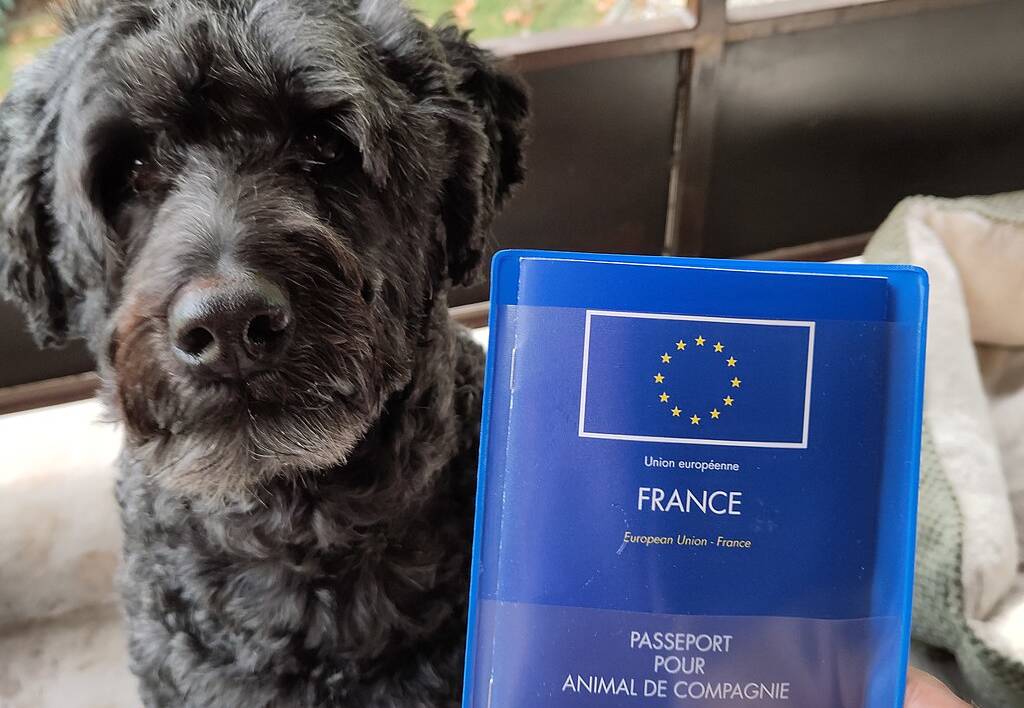
Although the EU issues actual passports for pets, the U.S. will give internationally traveling pet owners an Animal Health Certificate. You can visit the USDA Animal and Plant Health Inspection Service page to ensure your pet meets your destination country’s specific requirements.
How do I get proper documentation for my pet?
You will need to visit a USA-accredited vet to verify your animal’s overall health and vaccinations. If all is well, they will give you a health certificate (AHC) to clear your pet for travel (some countries require they be endorsed by USDA APHIS) within 10 days of travel.
Next, your pet needs to be implanted with an ISO-compliant microchip, and you should have the microchip number handy. Afterwards, you’ll need to have proof of rabies vaccination after microchipping and at least 21 days before travel. Please verify which additional vaccination proofs your destination country may require.
Moreover, double check the requirements of your airline carrier as their pet policies may vary.
How long is an Animal Health Certificate valid?
An AHC is valid once inside the EU for up to four months or until the rabies vaccination expires, whichever comes sooner.

Does my pet need a new Animal Health Certificate for each trip?
Yes. An AHC is only valid for a single journey. Thus, your pet will need a different AHC for every new visit to the EU, UK, Northern Ireland, etc.
Learn more about traveling with your pet on the U.S. Department of State’s pets and international travel page.