

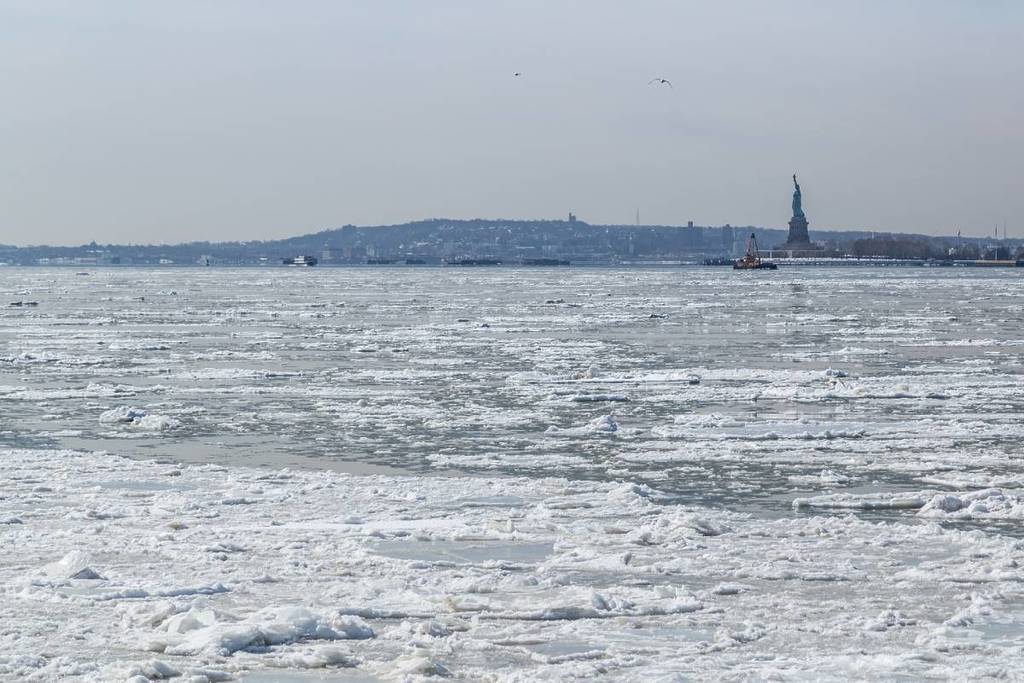
A lot of New Yorkers treat the Hudson River like background scenery at best and a giant puddle to avoid at worst. But beneath that murky surface, the river is doing something wildly unusual: it changes direction about every six hours, flowing north and south in a daily tidal tug-of-war.
Instead of flowing only toward the Atlantic Ocean like most rivers, parts of the Hudson actually reverse course twice a day. The phenomenon affects more than 150 miles of the river and makes the Hudson one of the largest tidal estuaries in the United States.
Why does the Hudson River flow backward?
The lower half of the Hudson is controlled less by gravity and more by the Atlantic Ocean’s tidal pulse.
As the ocean tide rises, seawater pushes upstream into the river, forcing the current to move northward. When the tide falls, gravity takes over and the river resumes its southbound flow toward New York Harbor. This cycle repeats twice daily, creating a steady rhythm of reversing currents.
During strong tides, the current can switch directions at speeds of up to 2.5 knots–that’s about 2.87 miles, and yes, we looked that up.
“The river that flows two ways”
Long before modern science explained the phenomenon, Indigenous Lenape communities named the river Muhheakantuck, often translated as “the waters that are never still” or “the river that flows both ways.”
The name reflects centuries of observation of the Hudson’s constant motion.
Where the reversal happens
The tidal influence stretches north from New York City all the way to the Federal Dam in Troy, just above Albany. South of that point, the Hudson is technically an estuary–a mix of freshwater from inland rivers and salty Atlantic water.
Unlike the steep, fast-moving upper Hudson in the Adirondacks, this lower stretch drops only about five feet in elevation over more than 150 miles. That gentle slope allows ocean tides to overpower the river’s natural downhill flow.
A constantly shifting ecosystem
Because tides carry salt, nutrients and sediment in and out, the Hudson estuary is one of the most dynamic ecosystems on the East Coast. Salinity, water depth, and circulation patterns can change dramatically within a single day.
The result is a river that never truly stands still–even when it looks calm on the surface.