


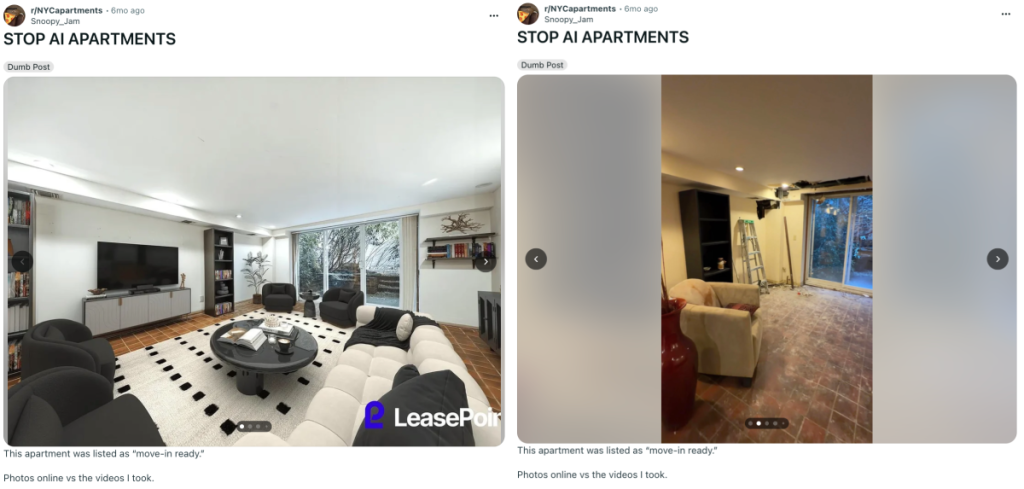
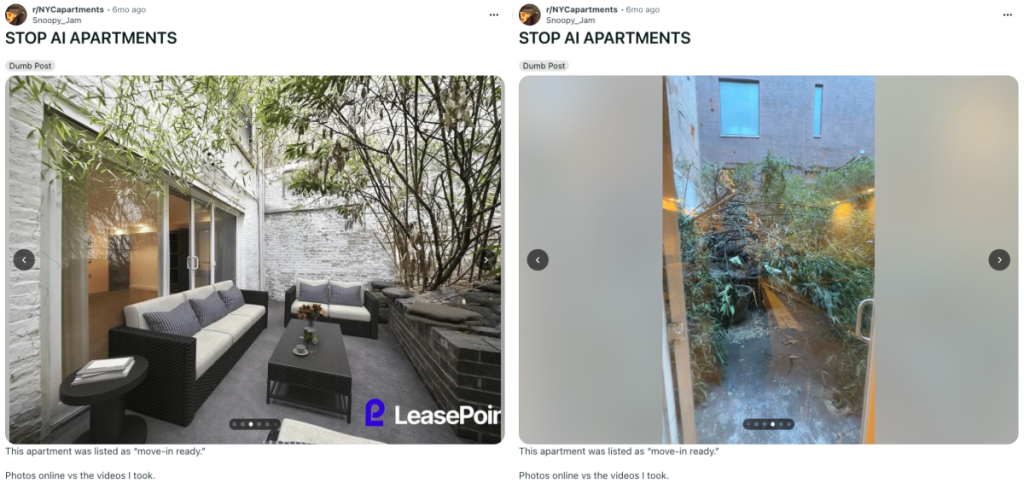
If you’ve ever browsed apartment listings in New York only to show up to an open house and realize you’ve been completely catfished, a new piece of legislation creeping through Albany could soon put an end to digitally fabricated dream homes.
Assembly Bill A11635, introduced by Assemblymember Linda Rosenthal, aims to crack down on the increasingly common practice of using artificial intelligence and heavy photo editing to mask property flaws. While virtual staging is often used to showcase an apartment’s potential, the proposed law would force brokers, sellers, and landlords to reveal the unaltered reality alongside any AI enhancements.
Here’s a breakdown of where the proposed bill currently stands in the state legislature, what actually counts as a “digitally altered” image, and what it would mean for NYC house hunters and real estate agents if it becomes law.
What to know about New York’s AI real estate bill
Introduced on July 29, 2026, the legislation targets the growing practice of using artificial intelligence and advanced photo editing to make properties look better than their actual real-life condition.
If passed, the bill amends real property law to enforce strict transparency rules on real estate brokers, sellers, and property managers.
Key requirements under the proposed law include:
- 📸 Mandatory Disclosure: Any advertisement or promotional material using a digitally altered or AI-generated image must feature a visible disclosure statement right next to the photo
- 🔍 Original Photos Required: If an altered photo is posted online, the listing must also include the unaltered, original version of the image (or provide a direct link to it) so house hunters can compare the two
- 🛋️ Targeting Major Alterations: The disclosure rule applies specifically when AI or software is used to add, remove, or change physical elements of the property—such as swapping out flooring, removing walls, adding virtual landscaping, or digitally staging furniture and appliances
Key exemptions from the rule
Brokers won’t be penalized for basic photography adjustments.
Typical photo editing practices that do not change the actual physical condition of the property remain completely legal without disclosure. This includes:
- Adjusting lighting
- Sharpening
- Color correction
- White balance
- Straightening
- Cropping
Why it matters for New Yorkers
The push for regulation follows growing frustration from tenants who feel they’ve been “catfished” by heavily manipulated listings, as Curbed puts it.
The issue was a focal point during the city’s recent “rental rip-off” hearings, prompting the NYC Department of Consumer and Worker Protection (DCWP) to explore its own rules requiring clear AI disclosures on rental platforms like StreetEasy and Zillow.
Note: New York State Real Property Law already prohibits dishonest or misleading advertising. Renters and buyers who feel duped by AI-enhanced listings can currently file complaints with the NYS Department of State Division of Licensing Services.
When would the new rules take effect?
Assembly Bill 11635 remains in the Housing Committee and is expected to be discussed when the state legislature gathers for its next session in January 2027.
If passed and signed into law, the mandates would officially take effect 60 days later.