
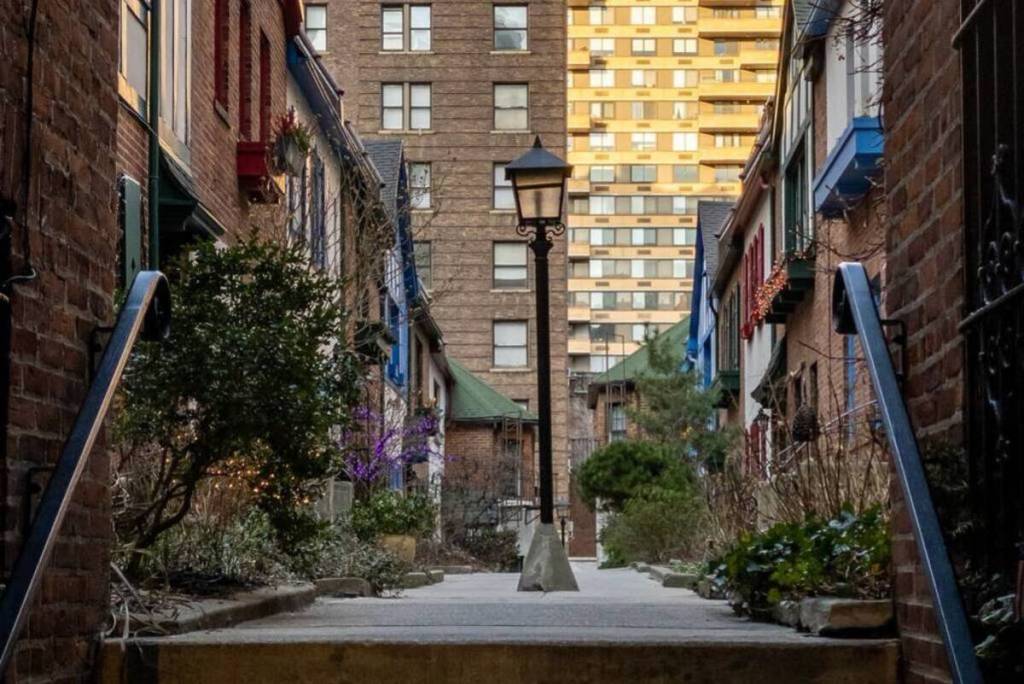

London is famous for its bustling avenues like Oxford Street. But it’s also loved for its dreamy mews streets and historic alleyways. These quiet roads remind us of a time when horses and carriages ruled the city.
While NYC has plenty of its own cobblestone streets, there’s one spot that feels like a direct flight across the pond. Welcome to Pomander Walk, an otherworldly hidden gem that has retained its historic charm for over a century.
A charming micro-neighborhood hidden in plain sight
Pomander Walk is actually more than just a single road. It’s a beautifully preserved micro-neighborhood tucked away on the Upper West Side.
Even though it was built in 1921, you might have walked right past it without knowing it exists. The entire enclave is concealed behind a locked black gate on 95th Street, located midway between Broadway and West End Avenue.
If you’re lucky enough to be invited through the gates, a quick climb up a staircase reveals NYC’s most unexpected byway. The narrow courtyard is lined with 27 Tudor-style buildings. Their whimsical designs alternate between stucco, brick, and classic half-timber facades.
The complex was named after Pomander Walk, a romantic comedy by English playwright Louis Napoleon Parker that opened in New York in 1910. The play was set in an imaginary, old-fashioned crescent near London, and this NYC street perfectly captures that exact storybook energy.
The unique history of how Pomander Walk came to be
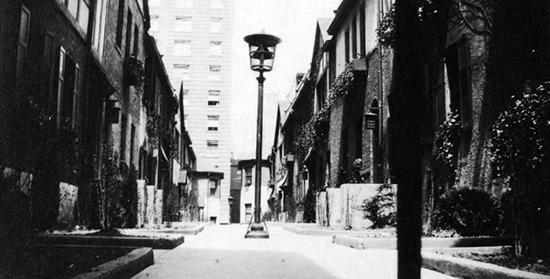

In 1921, an Irish immigrant and nightclub impresario named Thomas J. Healy bought a massive portion of the block. His ultimate goal was to build a major hotel on the site.
When Healy couldn’t immediately get the financing for his grand hotel, he hired the New York architecture firm King and Campbell to build a temporary “colony.” This Tudor village was only meant to provide a temporary cash flow until the homes could be razed for his hotel.
Fortunately for modern New Yorkers, Healy passed away in 1927 before his hotel vision could come to life, leaving Pomander Walk untouched. Originally, each building in the complex housed three flats, with one apartment occupying each floor.
Over the years, the quiet street attracted its fair share of notable past residents, including Paulette Goddard, Rosalind Russell, Nancy Carroll, and Michael Sorkin.
How this Tudor village was saved
By the 1970s, Pomander Walk had become incredibly rundown. The property was at severe risk of being purchased by developers and demolished for good.
Thankfully, the local tenants banded together to block the redevelopment. They successfully saved the beloved street in 1982 when it was officially designated as a New York City landmark and listed on the National Register of Historic Places.
In its official report, the Landmarks Preservation Commission perfectly captured the street’s spirit, noting that it is “a prototypically ‘American’ tale combining a pragmatic entrepreneurial spirit with an unabashed romanticism.” In 2009, the owners even completed a massive four-year facade renovation to restore architectural details that had been lost for decades.
What became of Pomander Walk today
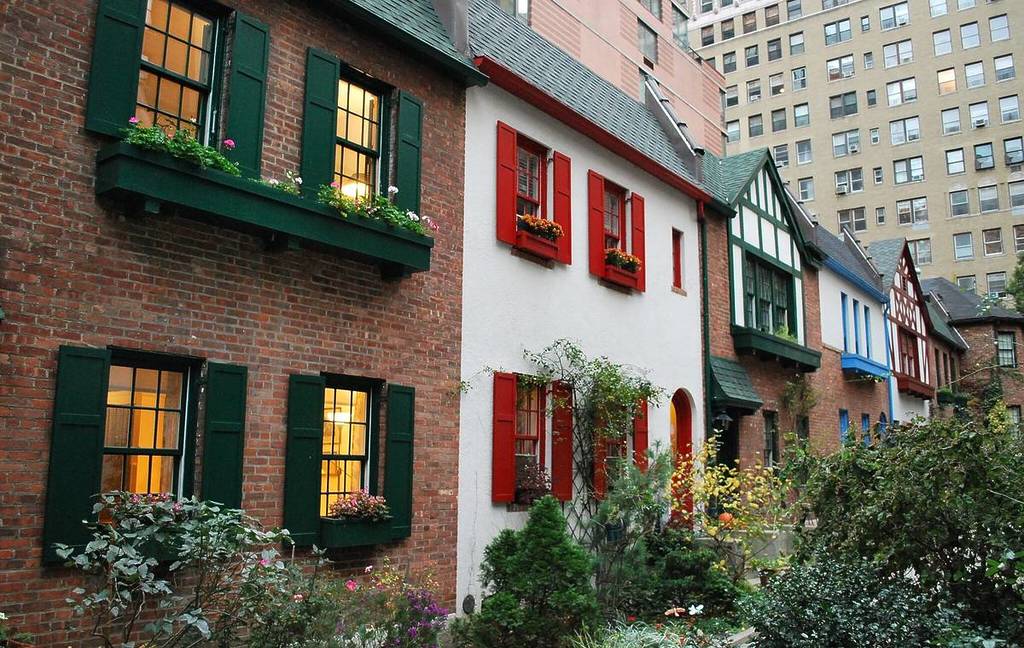

Today, this private, gated community serves as a stark, stunning contrast to the surrounding Manhattan skyscrapers.
The buildings have been beautifully maintained. Each Tudor home features lush, flowering gardens and vibrant window boxes that add to the magical atmosphere. While the 27 three-story buildings remain strictly residential, many have since been reconfigured into single-family townhomes.
Four of the buildings face West 94th Street, and another seven face West 95th Street (including one on West End Avenue). The actual “Walk” consists of two rows of eight buildings facing each other across the narrow courtyard, running directly through the middle of the block.
Important note: Pomander Walk is not open to the public. It is accessible to residents only, and visits are strictly by invitation.
However, the next time you are strolling through the neighborhood, it is absolutely worth walking by the gates on 94th and 95th Streets. Even a quick peek through the iron bars will instantly transport you back in time!
📍 Upper West Side, between Broadway and West End Avenue (Gates on W 94th and W 95th Streets).