
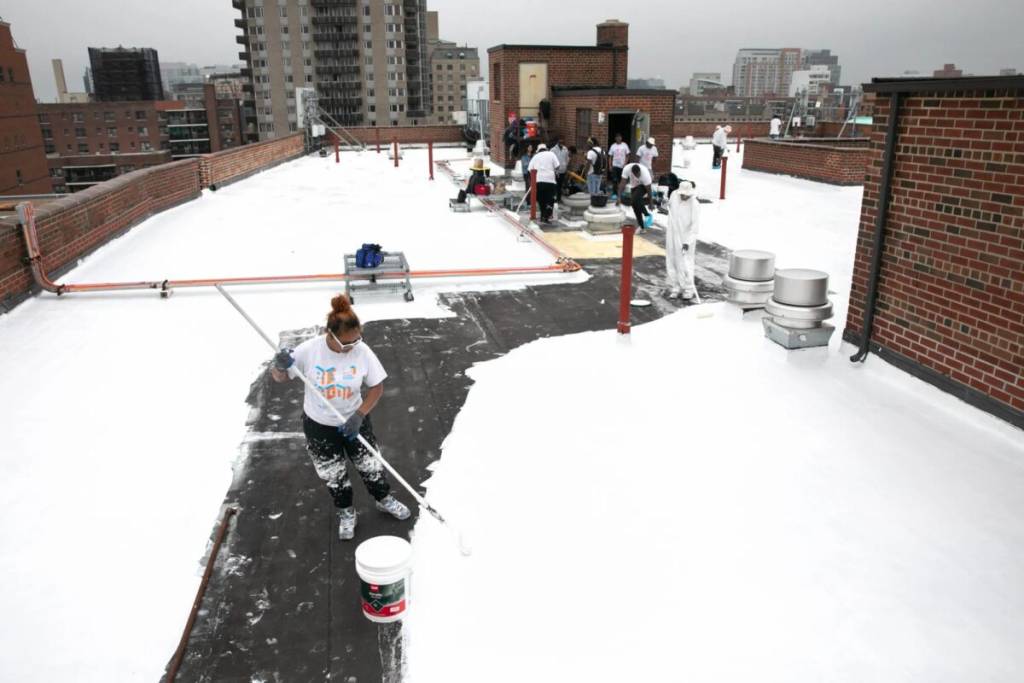

New Yorkers know that summer in the city can feel like an absolute oven, but there is a surprisingly simple solution hiding right above our heads.
The NYC CoolRoofs program is on a mission to paint the town white—literally—by installing energy-saving, reflective rooftops across the five boroughs.
This high-utility initiative isn’t just about beating the heat; it provides job-seeking New Yorkers with paid training and work experience in the construction sector while actively pushing the city toward its goal of carbon neutrality by 2050.
The science behind the cooldown
During a typical summer day, flat, black asphalt rooftops absorb massive amounts of heat. They can reach sweltering temperatures of up to 190°F—which is a staggering 90 degrees hotter than the surrounding air.
By coating these surfaces with specialized reflective materials, buildings can significantly cut down on absorbed heat.
In fact, these cool rooftops can reduce internal building temperatures by up to 30 percent, providing major relief for residents, extending the lifespan of HVAC equipment, and drastically lowering summer cooling costs.
Combating the urban heat island effect
Because of our dense concentration of dark roads and roofs, New York City can run up to five degrees hotter than surrounding suburban areas.
The CoolRoofs initiative directly fights this phenomenon and lowers citywide greenhouse gas emissions.
For every 2,500 square feet of roof coated, the city reduces its carbon footprint by one ton of CO2. The program currently aims to coat one million square feet annually.
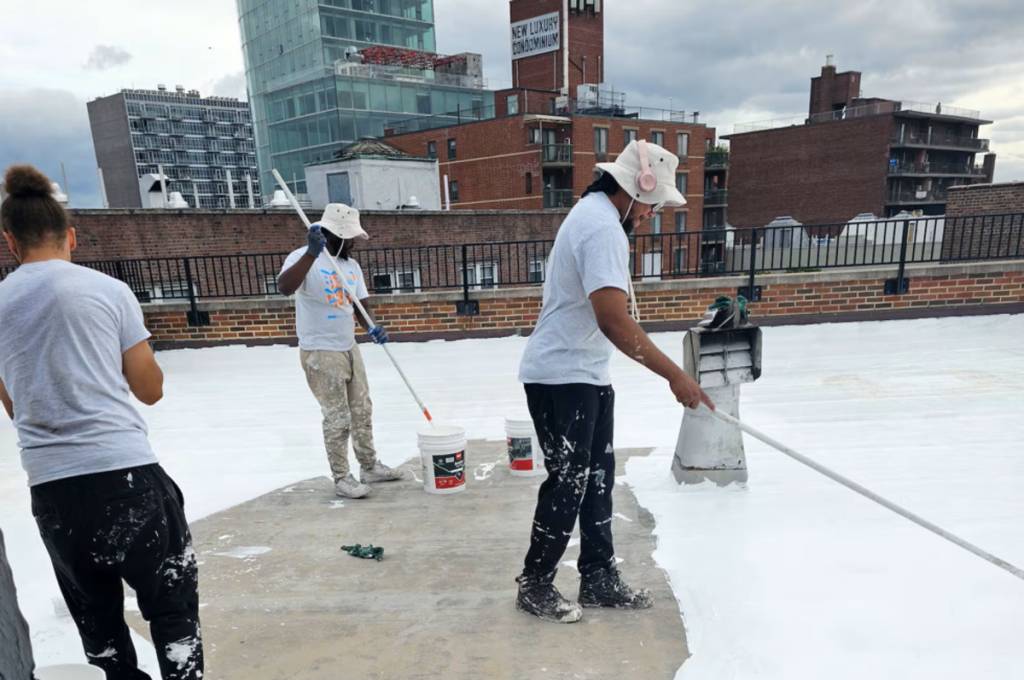
How to get your roof coated for free
If you want to upgrade your building, the city offers installations at no cost to non-profits, affordable housing, schools, hospitals, community centers, and cultural institutions.
For all other private building owners, the program provides free labor and technical assistance—you just pay a discounted rate for the coating materials.
To be eligible, your building must meet a few basic requirements:
- The rooftop must be flat and in good condition with minimal cracking.
- It must be easily accessible (no hatch, ladder, or window access).
- It must be free of dangerous machinery or equipment.
- It needs an appropriate 3’8” parapet.
- The surface must be granulated cap sheet, asphalt, modified bitumen, or bitumen.
This initiative is a joint effort between the NYC Department of Small Business Services (SBS), the Mayor’s Office of Climate and Environmental Justice, and The HOPE Program.