

The Brooklyn Heights Promenade exists because of a fight.
In 1941, Robert Moses wanted to run the Brooklyn-Queens Expressway straight through the middle of Brooklyn Heights, and the neighborhood said absolutely not.
The compromise that followed is one of the strangest, most quietly brilliant deals in New York’s history: bury the highway in a triple-decker structure along the waterfront, and build a public park directly on top of it.
That structure, now pushing 80 years old, is falling apart.
And this week, Mayor Zohran Mamdani announced the city is finally doing something about it.
The highway everyone walks over and nobody thinks about
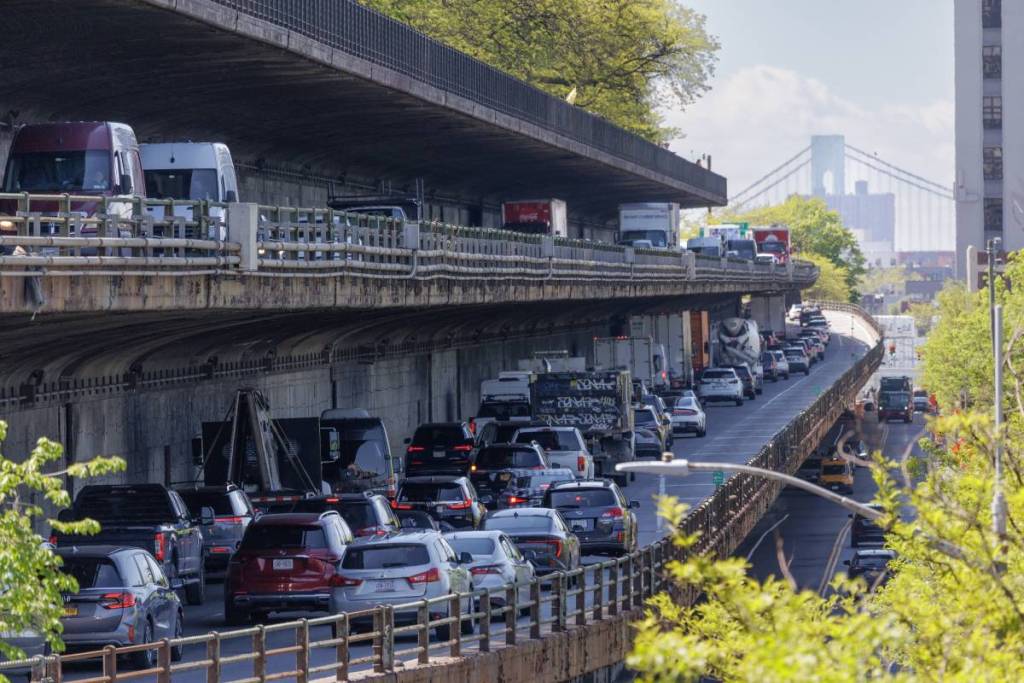
Every year, millions of people stroll the Brooklyn Heights Promenade, taking in one of the best views of the Manhattan skyline anywhere in the city, without necessarily clocking that they’re standing directly on top of a highway carrying 130,000 vehicles a day, according to the Mayor’s Office’s own announcement.
That’s more than double what the structure, known as the triple cantilever, was ever designed to handle.
Built between 1944 and 1948 as part of the original Moses-era compromise, the cantilever stacks three eastbound highway lanes on top of three westbound lanes, with the promenade sitting on top of both, per historical records maintained by NYC Parks.
It’s now 20 years past its intended design life, and the city says it’s deteriorating under the weight of decades of unplanned traffic growth.
Why this has been stuck in limbo for so long
This isn’t a new problem.
City and state planners have been studying fixes for the BQE’s central section since at least 2006, and the effort has been restarted, defunded, and restarted again more than once since.
A 2021 plan to extend the cantilever’s life by 20 years while reimagining the surrounding corridor got shelved when a new mayoral administration took over the following year. Engineers have warned that without real intervention, truck traffic on the BQE could need to be banned entirely as soon as this year, based on projections from a 2019 Regional Plan Association report.
Mamdani’s announcement is blunt about the cost of all that delay.
Every year the city waits, it loses an additional $160 million in escalating repair costs, and risks a shutdown that would push 13,000 daily truck trips onto local Brooklyn streets instead.
“For decades, prior administrations have failed to deliver urgent long-term repairs to BQE Central, but we can no longer afford to wait for the perfect solution,” Mamdani said in the announcement.
NYC DOT Commissioner Mike Flynn was even more direct: “Time is up. We are fixing the triple cantilever.”
The fix involves building an entire second highway, temporarily
Here’s where the plan gets genuinely strange, in a very New York infrastructure kind of way.
To repair the highway without shutting it down and dumping tens of thousands of cars onto neighborhood streets, the city plans to build temporary bypass highways around the construction zone.
One bypass will run two levels tall, tucked beneath the promenade itself along Furman Street, stretching from Atlantic Avenue to Columbia Heights. City officials say it will sit no higher than the existing Queens-bound highway and will not block promenade access. A second temporary bypass will run elevated, from Columbia Heights over the Brooklyn Bridge approach to the Manhattan Bridge.
In other words, the city is about to build a second, temporary version of the same problem the promenade was invented to hide, all so it can fix the original one underneath.
What happens next, and when
The full rehabilitation is expected to cost roughly $4 billion and take 10 years, with construction breaking ground in 2030 and extending the structure’s life another 40 years once complete.
Before any of that, NYC DOT will kick off the formal environmental review process this fall, with a full environmental impact statement expected by summer 2028.
In the meantime, the city and state say they’re pushing ahead on smaller, more immediate upgrades along the broader BQE corridor, including a traffic safety redesign on Third Avenue in Sunset Park, $17 million in capital upgrades to Park Avenue in Fort Greene and Clinton Hill, and the recently completed Brooklyn Waterfront Greenway work in Gowanus and Red Hook.
For now, the promenade stays open, the views stay free, and the highway underneath keeps carrying double the traffic it was ever meant to hold, at least until 2030 finally arrives.