

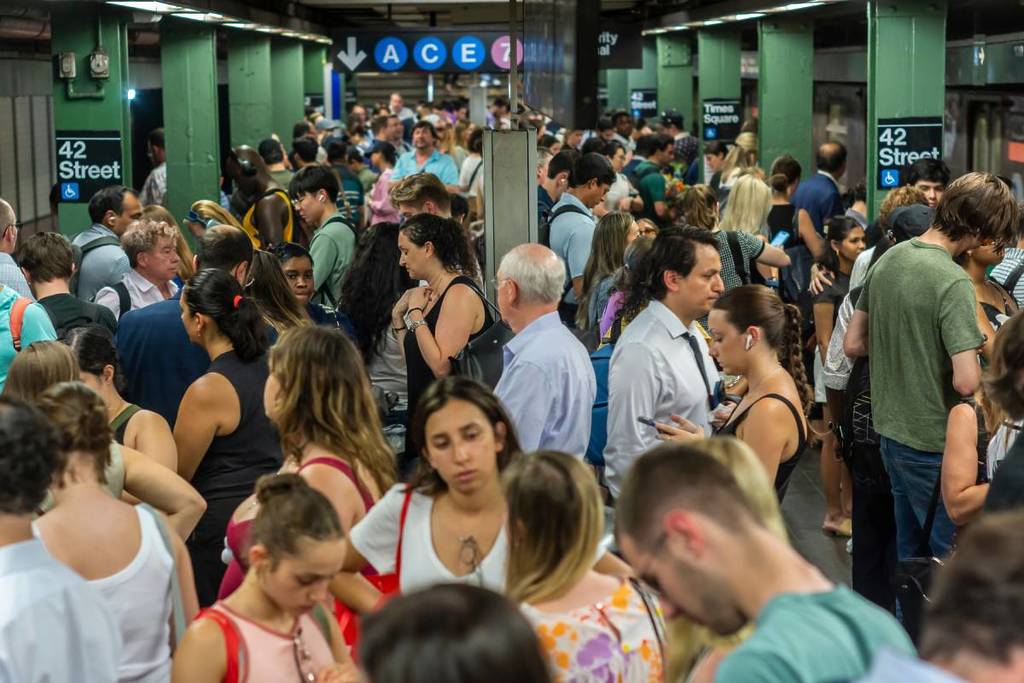
There are a few things you can count on every summer in New York City: Mister Softee jingles echoing down the block, fire hydrants spraying kids on the corner, and subway platforms so sweaty they feel like the ninth circle of hell. Step onto the platform and you’re instantly transformed into a human puddle, dripping like you just got dunked in the East River.
The MTA swears it’s heard the collective groans—and sweat drops—of millions, and is now digging deep (literally) to test geothermal cooling, a system that basically shuttles trapped platform heat deep underground, at two of its steamiest stations.
If it works, the platforms could hover in the (almost luxurious) 82-85°F range on scorching days. Not exactly chilly, but compared to the current sauna conditions, it’s practically arctic relief.
The timing is no accident: the MTA’s own climate projections warn that by the 2050s, New Yorkers could face up to seven heat waves a year–up from two–and as many as 70 days over 90 degrees. That’s triple what the city sees now, and bad news for both straphangers, MTA workers, and subway infrastructure already straining under the heat.
When the subway was first built, ventilation relied on a simple “piston effect”—moving trains pushing hot air out and pulling cooler air in. Back then, most of the heat came from train brakes. Today, electronics, power equipment, and subway A/C units dump their exhaust onto platforms, a recipe for the underground inferno we all know too well.
Of course, the MTA has tried cooling tricks before—air tempering systems, giant fans, even a few modern stations designed with chillers—but only seven out of 472 stations actually have these upgrades, and there’s no questioning whether or not we can tell. As for those of us not in those stations, we’re left with handheld fans and in desperate need of a shower.
Geothermal technology could change that, though exploring whether or not it can work within a 12-decade-old subway system will be a challenge as it would need to “withstand steel dust concentrations, water conditions (such as stormwater exposure), vandalism, and constant shaking/high vibrations,” according to the request.
Being there’s no telling whether or not this geothermal cooling technology would actually work–and only two stations are currently being eyed for it: the 1 train’s 168th and 181st street stations–we advise you keep your personal fan handy…because summer subway rides in NYC aren’t cooling off anytime soon.