
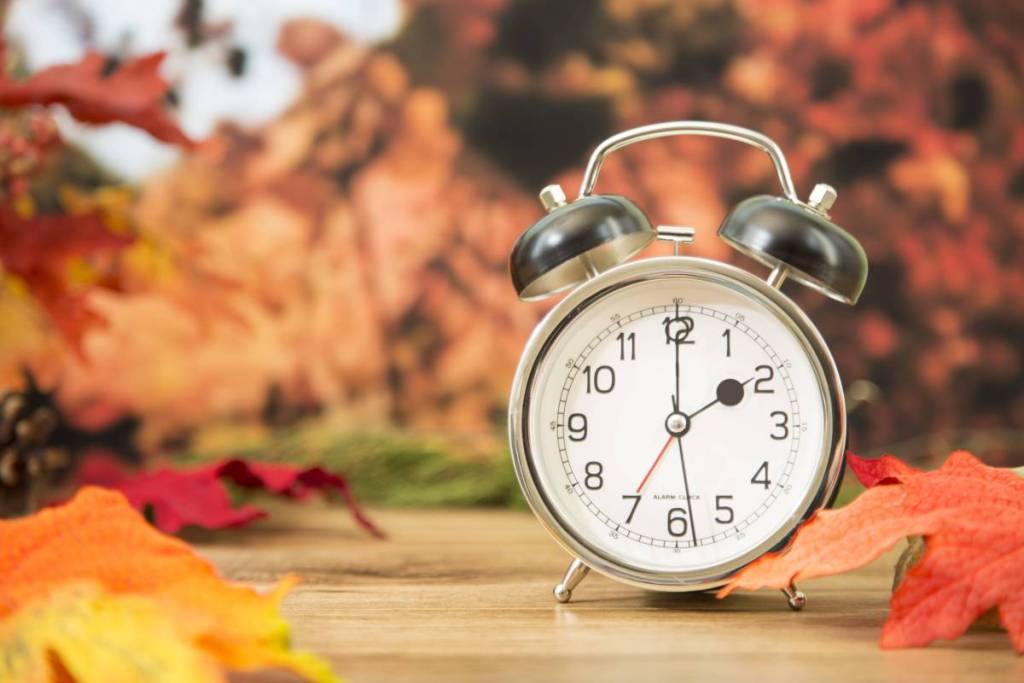

New York’s annual appointment with before-5 pm sunsets is still on the calendar, even as the campaign to stop changing the clocks gets another burst of attention in Washington.
Daylight saving time ends on Sunday, November 1, 2026, when clocks move backward from 2 am to 1 am.
That evening, NYC’s sunset will arrive at 4:52 pm, putting a rather firm deadline on any afternoon plans involving daylight.
The Sunshine Protection Act, which would make daylight saving time permanent, passed the House in July. But it has yet to clear the Senate, and Senate Majority Leader John Thune now says there is “no clear path forward or consensus on it yet.”
Here’s where the proposals stand and what the November time change means for New Yorkers.
What’s happening with the clock-change bill?
There has been real movement, just not enough to change your calendar.
The Sunshine Protection Act of 2025, introduced by Florida Representative Vern Buchanan, passed the House on July 14, 2026, by a vote of 308–117. It was received in the Senate the following day and referred to the Commerce, Science, and Transportation Committee. Congress’s current tracker still lists it as “Passed House,” not enacted law.
The proposal would effectively keep most of the country on daylight saving time year-round, ending the seasonal switch back to standard time. In everyday terms, it would preserve later evening sunsets on the clock, with later winter sunrises as the trade-off.
President Donald Trump renewed his push for the legislation in early October, referring to it as the “No More Changing of Clocks Act.” Arkansas Senator Tom Cotton remains an opponent, arguing that families don’t want children going to school “in the pitch dark”.
But opposition is broader than one senator. Thune said discussions were continuing without a clear path forward, and Senator Roger Wicker also raised concerns about early school-bus journeys in northern and rural states.
Florida Senator Rick Scott is pushing for a vote during the November–December lame-duck session. That is an effort to secure a future vote, not confirmation that a law will be in place before November 1.
For now, New York’s scheduled clock change remains unchanged.
Not every proposal keeps summer time
“Stop changing the clocks” sounds straightforward, but choosing which time to keep is where things get complicated.
The main proposal, the Sunshine Protection Act, would keep most of the country on daylight saving time permanently. But it is not the only approach lawmakers have put forward.
The Sunshine for Our Kids Act would do the opposite, abolishing DST and keeping standard time year-round.
Other proposals would let states choose permanent daylight saving time or move standard time forward by 30 minutes.
The disagreement is less about whether people enjoy resetting the microwave clock and more about which hours should get the daylight: earlier winter mornings or later winter evenings.
Permanent DST favors later evening light. Permanent standard time favors earlier morning light. Neither creates additional sunlight, however appealing that would be in February.
There is also a health argument for standard time. The American Academy of Sleep Medicine recommends ending seasonal changes in favor of permanent standard time, saying it aligns better with human circadian biology, according to the congressional review.
So when do New Yorkers fall back?
Under the current schedule, clocks turn back at 2 am on Sunday, November 1, returning to 1 am and putting New York back on Eastern Standard Time.
The timing means the switch happens during the early hours after Halloween night. Anyone still out celebrating gets a repeated 1 am hour.
November 1 is the earliest possible fall-back date under the existing rule: daylight saving time ends on the first Sunday in November. This year, that Sunday happens to be the first day of the month.
NYC’s sunset moves before 5pm
On November 1, NYC’s sunrise will be at 6:26 am and sunset at 4:52 pm, according to Timeanddate’s November sun calendar.
The afternoon cutoff keeps creeping earlier throughout the month:
- November 2: Sunset at 4:51pm.
- November 15: Sunset at 4:37pm.
- November 30: Sunset at 4:29pm.
That puts sunset before the end of a typical nine-to-five workday.
The clock change does not remove an hour of actual sunlight overnight. It shifts sunrise and sunset earlier on the clock while the days continue to shorten seasonally. November 1 still has approximately 10 hours and 26 minutes between sunrise and sunset, with evening civil twilight continuing until about 5:20 pm.
Can New York change the rules?
Not by independently adopting permanent daylight saving time.
Federal law allows states to opt out of DST and observe standard time year-round. However, states cannot unilaterally adopt permanent DST or change the federally established seasonal schedule. That requires federal action.
For New Yorkers, the practical answer remains: plan to turn the clocks back November 1.
The effort to end seasonal changes though, is still very much active!