
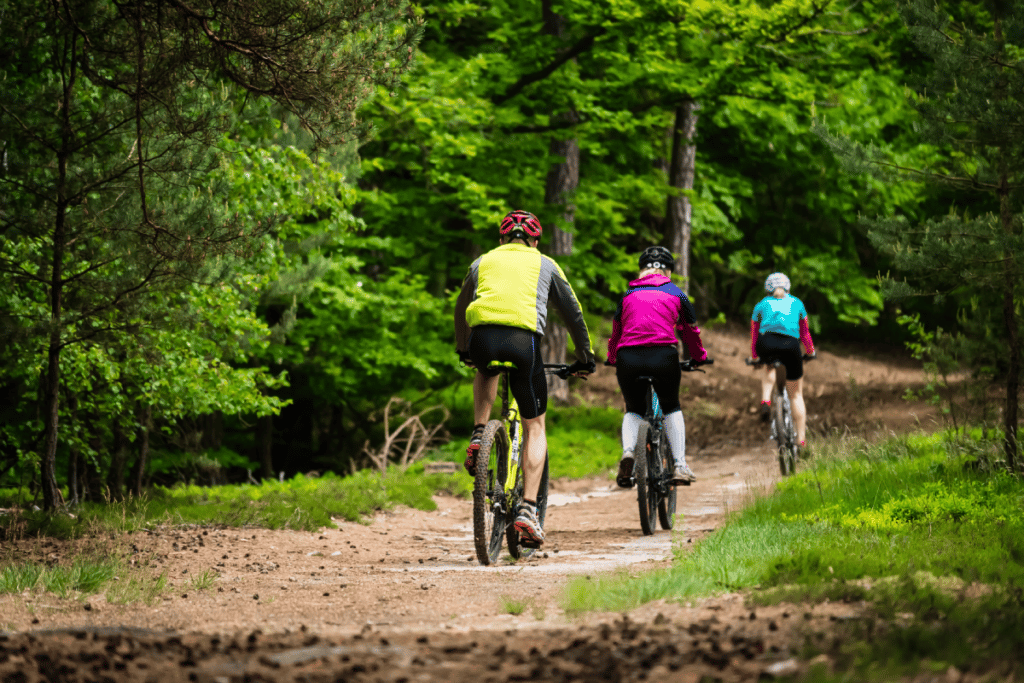

Did you know there’s a record-breaking, multi-use trail network that starts right in Manhattan and can take you all the way to Canada?
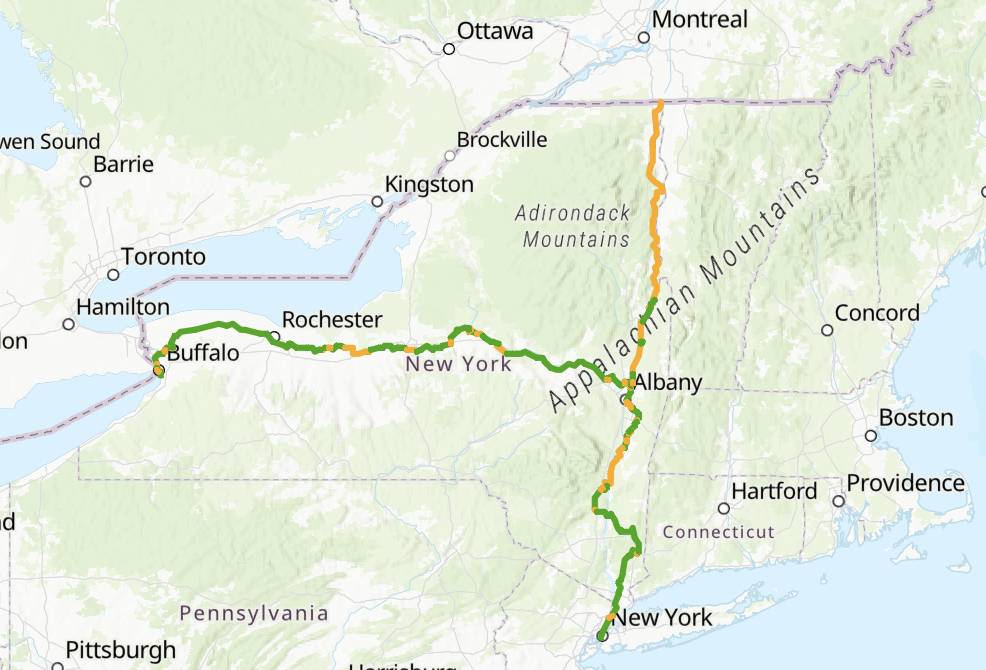
Spanning a massive 750 miles, the Empire State Trail is the longest of its kind in the United States, connecting New York City to Albany, Buffalo, and beyond in one continuous route.
And while the “spine” of the trail technically opened back in 2020, 2026 is shaping up to be the year it truly levels up–from a stitched-together pathway into a fully seamless, experience-driven recreation corridor.
So whether you’re looking for a quick Hudson River bike ride or plotting a full on NYC-to-Canada adventure, here’s everything you need to know.
About The Empire State Trail
Think of it less like a single trail and more like a choose-your-own-adventure across New York State.
The Empire State Trail is actually made up of three major routes:
- The Hudson Valley Greenway (NYC → Albany)
- The Erie Canalway Trail (Albany → Buffalo)
- The Champlain Valley Trail (Albany → Canada)
Along the way, it links together hundreds of pre-existing paths, rail trails, and greenways, creating one continuous, signed route across the state.
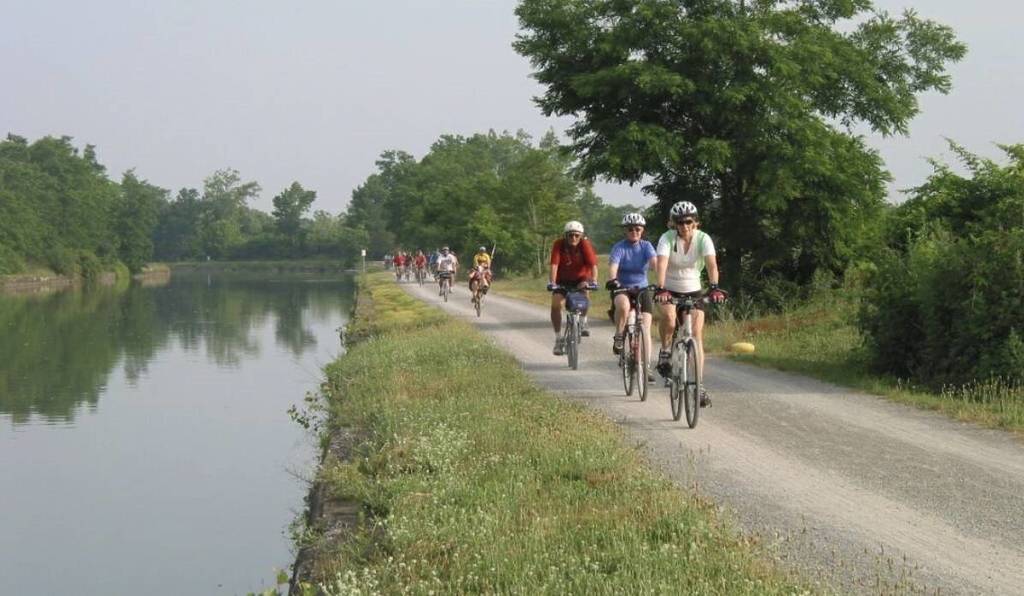
The best part? About 75% of the trail is off-road, meaning you’re biking or walking on scenic, car-free paths–think: riverside promenades, converted railroad lines, forest corridors, and canal towpaths.
Where The Trail Starts (Yes, Right In NYC)
For New Yorkers, the journey begins at The Battery in Lower Manhattan or at the Little Red Lighthouse under the George Washington Bridge.
From there, the trail follows the Hudson River Greenway up Manhattan’s west side, cutting through the Bronx and into Westchester before opening up into long, leafy rail trails.
Within just an hour or two, you’ll go from skyscrapers to quiet wooded paths, without ever needing a car.
What It’s Actually Like To Use
One of the coolest things about the Empire State Trail is how flexible it is. You can:
- Bike a 10-mile stretch in Westchester
- Walk a waterfront section in Manhattan
- Or go all in on a multi-day bikepacking trip across the state
Some sections–like the Maybrook Trailway–are especially popular thanks to their smooth, flat, rail-trail design that cuts through wetlands, forests, and small towns. These stretches were built on former railroad lines, which means minimal hills and long, uninterrupted miles.
And if you don’t feel like committing to the full 750 miles (fair), the trail is designed with easy access points, Metro-North connections, and nearby towns where you can hop on and off whenever you want.
What’s New For 2026
Even though the trail is technically complete, recent upgrades have been all about making the experience smoother, safer, and more scenic.
Major “Gap Closures”
For years, certain sections required on-road detours–but those are quickly disappearing.
Recent construction has focused on closing the remaining on-road gaps to create a truly off-road, scenic experience:
- The Maybrook Bridge: Completed in late 2025, this final piece now connects the trail directly to the Connecticut state line
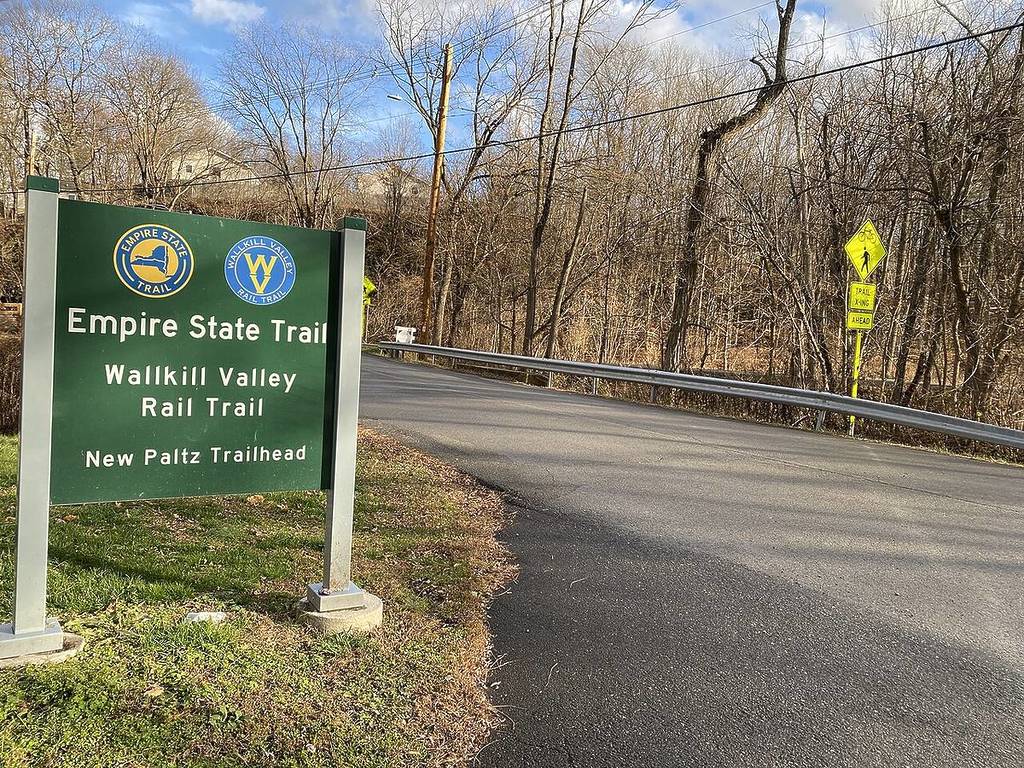
- New Paltz Connection: A critical 1.7-mile segment just opened in New Paltz, closing the largest remaining on-road gap between Kingston and NYC
- Adirondack Rail Trail: A new 34-mile scenic wilderness segment is now fully open, allowing for uninterrupted travel through previously inaccessible forest areas
Translation: less navigating traffic, more cruising through nature.

The Rise Of “Trail Towns”
To help New Yorkers navigate this massive journey, several cities were officially named 2026 Trail Towns, meaning they now offer dedicated bike-friendly amenities, local dining, and easy lodging just steps from the path:
- Utica: The largest Trail Town to date, serving as a cultural hub for those traveling the Erie Canalway
- Lyons: A historic gateway known for its architecture and canal-era landmarks
Brand-New Scenic Segments
One of the most exciting additions? The Adirondack Rail Trail, a newly opened stretch that runs through remote wilderness you previously couldn’t access without serious backcountry planning.
It’s giving full “hidden New York” energy–and it’s now part of the broader Empire State Trail experience.
A Massive Long Island Expansion Is Already In The Works
And just when you thought 750 miles was enough…New York is already planning to go even bigger.
A proposed Long Island Greenway would extend the Empire State Trail east from Manhattan all the way to Montauk, creating a nearly 200-mile continuous route across Long Island.
Right now, the Empire State Trail technically ends at The Battery–leaving out millions of New Yorkers living in Brooklyn, Queens, and Long Island. This new greenway aims to change that by directly linking those communities into the statewide network.
Once complete, the project will:
- Connect 90+ communities within a short walk of the trail
- Serve an estimated 5 million annual users
- Provide a fully protected, car-free alternative to some of Long Island’s busiest roadways
The plan is split into five major sections, including a critical Manhattan-to-Long Island connection, plus routes stretching through Riverhead, Montauk, and Orient Point.
Even better: it’s not just conceptual anymore.
With $35 million already secured–including funding for the first 12 miles–construction on the initial segment is expected to begin this year.
How To Plan Your Own Trip
Whether you’re in it for a casual afternoon or a multi-day adventure, planning is surprisingly easy.
The official trail site offers:
- An interactive map with every segment
- Real-time updates on closures and detours
- Suggested itineraries and nearby stops
(Quick tip: occasional maintenance closures still happen, so it’s worth checking ahead before heading out.)
The Bottom Line
The Empire State Trail isn’t just a bike path–it’s basically New York’s version of a road trip, minus the car.
You can start your morning in Manhattan, ride past castles and small towns in the Hudson Valley, and, if you really wanted to, end up at the Canadian border days later.
Not bad for something that starts with a simple bike ride along the Hudson.