
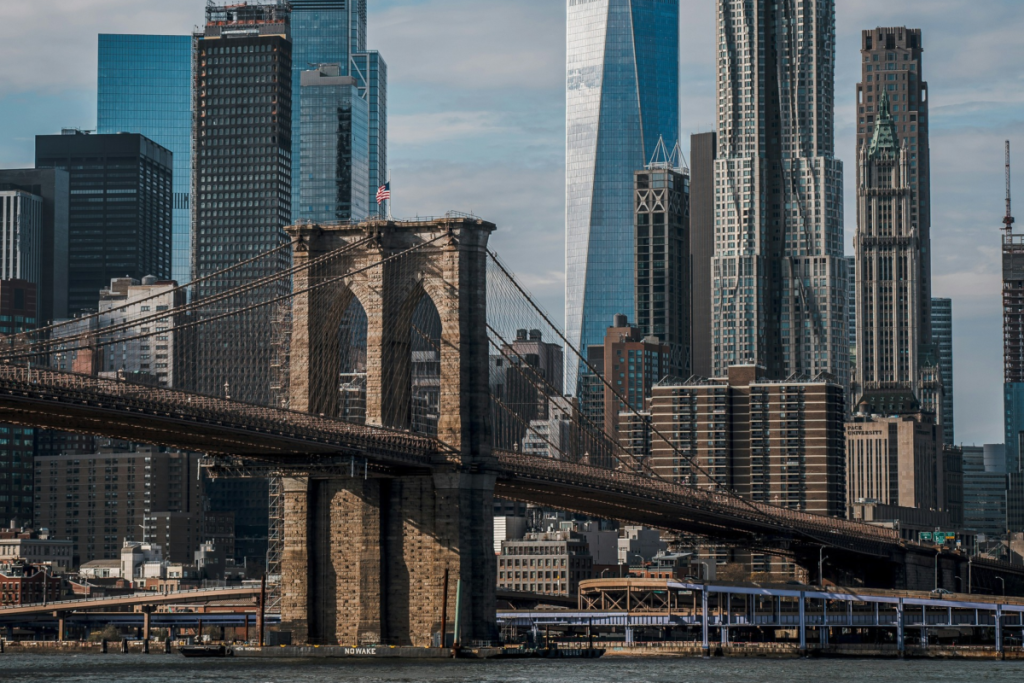

Imagine a 6-ton African elephant making its way across the East River? The Brooklyn Bridge is one of the most iconic sights in New York City, carrying over 116,000 vehicles and thousands of pedestrians every day. But New Yorkers weren’t always so keen on the “Eighth Wonder of the World,” and it took an absolute spectacle to convince the city that the massive structure wouldn’t just collapse into the water below.
Over 140 years ago, showman P.T. Barnum successfully paraded his prized elephant, Jumbo, along with 20 other elephants and 17 camels across the newly opened bridge. And while today we likely wouldn’t believe our eyes if we saw that, the 1884 stunt remains a massive—albeit quite quirky—part of the bridge’s history.
An 1883 Grand Opening Tarnished by Panic
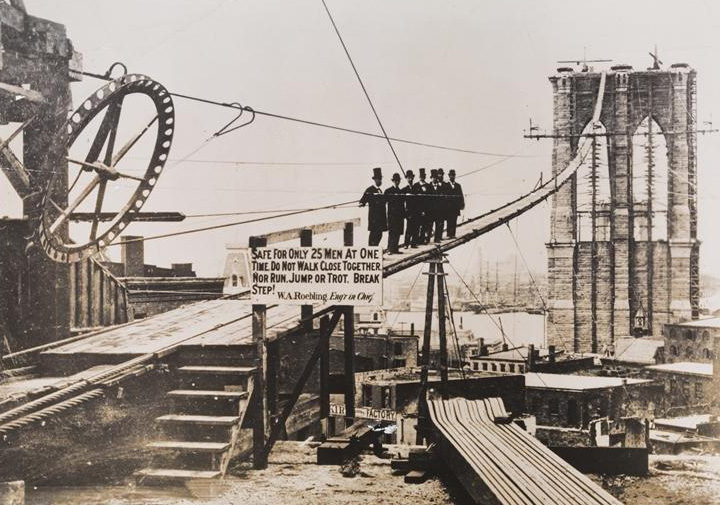
After 13 years of perilous construction, the Brooklyn Bridge finally opened to traffic on May 24, 1883.
Designed by John Roebling, it debuted as the longest suspension bridge on the planet, providing the first permanent physical link between the separate cities of Brooklyn and New York.
But New Yorkers being New Yorkers—which is to say, naturally suspicious—many doubted that a massive web of steel suspension cables could actually hold. At the time, suspension bridges had a notoriously bad reputation for collapsing under their own weight or buckling in strong winds.
Tragically, this anxiety peaked just six days after the grand opening, when a woman tripped on a narrow stairway, sparking a false rumor that the bridge was collapsing. The resulting panic and stampede left 12 people dead and dozens injured.
P.T. Barnum’s 21-Elephant (& Camel) Solution
Enter P.T. Barnum, who interestingly had pitched quite the proposal before the deadly disaster even happened.
During the bridge’s initial opening celebrations, the 19th-century circus impresario offered to parade his prized 6-ton African elephant, Jumbo, across the bridge to prove its weight capacity—provided the city paid him a $5,000 “toll” for the spectacle. Authorities flatly turned him down.
But in the aftermath of the stampede, the directors of the New York Bridge Company realized they had a massive PR crisis on their hands. To convince the public that the bridge was safe, they reconsidered Barnum’s offer—and this time, they didn’t have to pay him a dime.
On May 17, 1884—just shy of the stampede’s one-year anniversary—Barnum unleashed his menagerie, marching 21 elephants and 17 camels across the span, with Jumbo bringing up the rear.
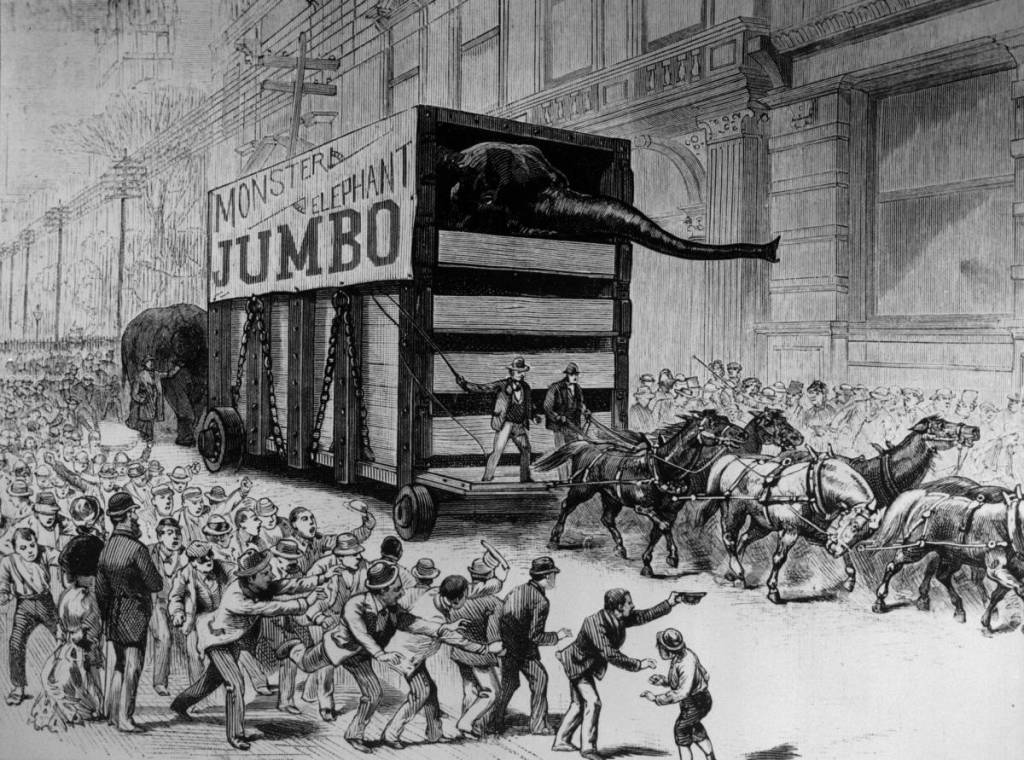
Thousands of awe-struck spectators gathered to watch the procession.
Because early flash photography was extremely limited, there are no actual photographs of the march. However, the press had a field day. The New York Times wrote at the time:
To people who looked up from the river at the big arch of electric lights it seemed as if Noah’s Ark were emptying itself over on Long Island. At 9:30 o’clock 21 elephants, 7 camels, and 10 dromedaries issued from the ferry at the foot of Courtlandt-Street…The white elephant, mindful of his sacred character, followed with dignity. The other elephants shuffled along, raising their trunks and snorting as every train went by.
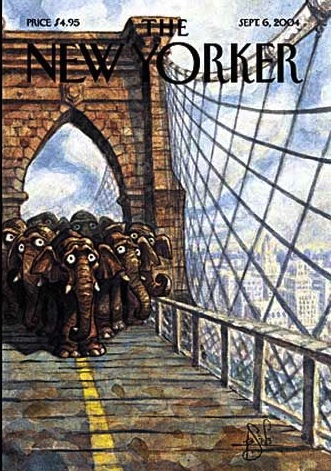
The massive animals crossed without any issues, the bridge didn’t budge, and Barnum got the promotional stunt of a lifetime while simultaneously saving the bridge’s reputation. The event was even featured on the cover of The New Yorker on September 6, 2024.
140 Years Later: A Commuter Artery
Fast forward over 140 years, and the bridge that New Yorkers once feared is now an irreplaceable artery of the city.
The structure that originally charged a 5-cent toll for cows and 2 cents for sheep now serves a totally different kind of stampede.
Instead of circus animals, the bridge now accommodates a staggering 116,000 vehicles, 30,000 pedestrians, and 3,000 cyclists every single day. In 2021, the city even repurposed a vehicular lane to create a two-way protected bike lane to handle the massive surge in cycling.
While it’s no longer the longest suspension bridge in the world (the nearby Williamsburg Bridge beat it by a measly 4.5 feet in 1903), it’s a designated National Historic Landmark and remains one of the most photographed locations on the planet.

Know Before You Go
- 📍 Location: Brooklyn Bridge, connecting Lower Manhattan and Downtown Brooklyn
- 🚇 How to Get There: Take the 4, 5, or 6 train to Brooklyn Bridge–City Hall, or the A or C train to High Street–Brooklyn Bridge. Follow signs to the pedestrian walkway
- 💡 Visitor Details: The pedestrian walkway is open year-round, offering sweeping views of the Manhattan skyline, the East River, and the Statue of Liberty. Allow about 30–60 minutes to walk across, depending on your pace and how often you stop for photos
- 💵 Cost: Free (unless you’re bringing an elephant)
Don’t miss out! Follow us on Facebook, Instagram, and now on WhatsApp, too!